


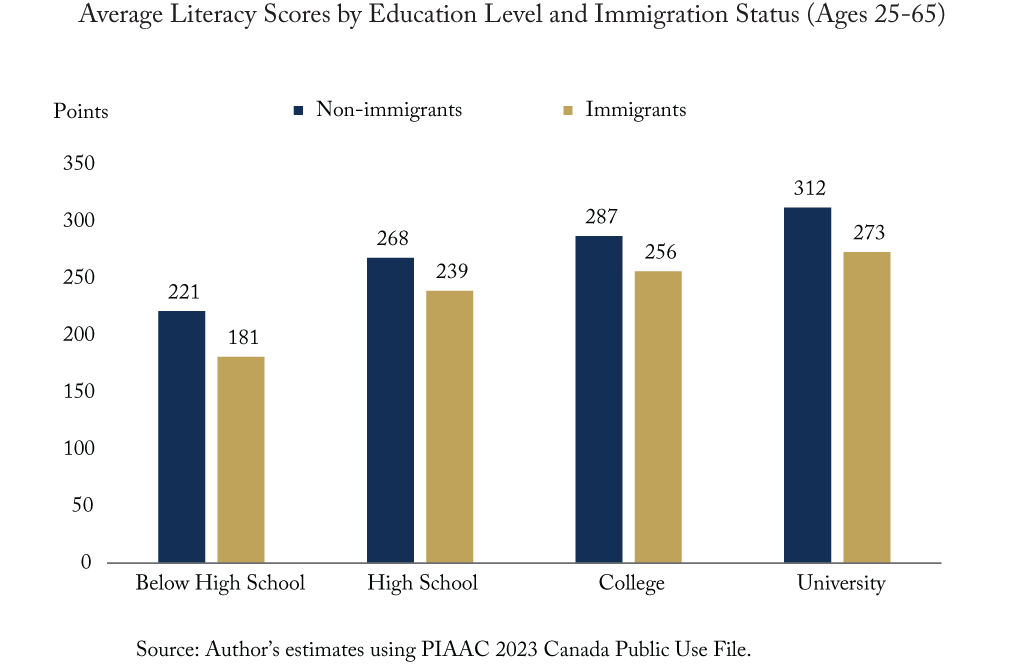
Immigrants in Canada score 29–39 points lower in literacy, on average, than non-immigrants with the same level of education. The gap persists across all education levels: university-educated immigrants score about the same as non-immigrants with only a high school diploma, and half of university-educated immigrants score at the two lowest literacy levels, compared with just 15 percent of university-educated non-immigrants. These findings highlight the need for immigration systems to look beyond educational credentials when assessing skills and economic potential. Raising language proficiency requirements for economic immigrants, accelerating foreign credential recognition, and improving employment-focused language training could help Canada make better use of immigrant talent.
For more on how Canada can strengthen immigration outcomes and help newcomers reach their full economic potential, read the Parisa Mahboubi’s upcoming report In A Matter of Degrees: Understanding Immigrant Skills and Labour-Market Outcomes.


