



Drew Yewchuk – Why Alberta’s Plan for the Unpaid Municipal Taxes of Oil and Gas Companies Won’t Work
 From: Drew Yewchuk To: Alberta’s orphan well watchers Date: December 14, 2021 Re: Why Alberta’s Plan for the Unpaid Municipal Taxes of Oil and Gas Companies Won’t Work New Alberta legislation gives municipal governments the power to place liens on pipelines and wells of companies that fail to pay their assessed municipal taxes as part of the province’s struggle […]
 Janis Sarra – Directors Need Help on Climate Change
 From: Janis Sarra To: Canada’s Boards of Directors Date: November 22, 2021 Re: Directors Need Help on Climate Change Climate change considerations are looming large in corporate boardrooms as directors grapple with emerging reporting rules. The latest development came with Mark Carney’s announcement at the COP26 summit in Glasgow of the Global Finance Alliance for Net Zero (GFANZ), whose […]
 Drummond, Samson – Four Pillars for Canada’s Green Transition
 From: Don Drummond and Rachel Samson To: Concerned Canadians Date: November 19, 2021 Re: Four Pillars for Canada’s Green Transition Canadian governments are counting on strong economic growth to reduce debt burdens that ballooned during the pandemic. But realizing that growth depends on how well Canadian businesses adapt to rapidly changing market realities. In the near term, Canada’s economic recovery […]
 Le marché pétrolier dicte le prix du carbone – La Presse Opinion
Alors que les gouvernements craignent de taxer davantage le carbone pour en décourager l’usage dans l’économie, le marché du pétrole en augmente brutalement le prix, se fichant éperdument de la colère des électeurs.
Nous nageons en plein paradoxe. Depuis longtemps, les économistes s’époumonent à demander aux gouvernements de hausser le prix du carbone, par une taxe ou une bourse, pour favoriser la transition vers les énergies propres, mais les politiques n’osent souvent que des pas timides.
Or, c’est le marché qui fonce présentement. Depuis le creux de la pandémie, le prix nord-américain du pétrole a bondi de 145 %, au-dessus des 80 $ US le baril, et celui du gaz naturel a triplé. Si on remonte à peu avant…
Benjamin Dachis – Ontario Government Shutting Down the Electricity Price Casino
 To: Ontario Electricity Watchers From: Benjamin Dachis Date: November 15, 2021 Re: Ontario Government Shutting Down the Electricity Price Casino Early this month, the Ontario government quietly announced plans to create a pilot “interruptible rate” for large industrial electricity customers. This is good news for customers and for a system that needs to rationalize its pricing regime. The […]
 The world’s heating up and so are boardrooms – Toronto Star Op-Ed
Climate change considerations are looming large in corporate boardrooms as directors grapple with emerging reporting rules.
The latest development came last week with Mark Carney’s announcement at the COP26 summit in Glasgow of the Global Finance Alliance for Net Zero (GFANZ), whose signatories, including major Canadian banks, have committed to achieving net-zero carbon emissions across their assets by 2050. That means clients seeking investments or loans from banks (not to mention insurance companies, pension funds, etc.) will also have to have their reporting ducks in a row.
Most of Canada’s big banks have begun setting their own net-zero goals earlier. For them, as for all corporations, effective climate governance…
Jon Johnson – Section 232 Tariffs – Pathway to Climate Protection or Managed Trade?
 From: Jon Johnson To: US Trade Policy Observers Date: November 11, 2021 Re: Section 232 Tariffs – Pathway to Climate Protection or Managed Trade? On October 30, the US and the EU announced a deal that replaces Trump-era US tariffs on EU steel and aluminum under Section 232 of the Trade Expansion Act of 1962 […]
 Dillon, Gullo – Canada Needs to Get Serious on Carbon Capture
 From: John Dillon and Michael Gullo To: Department of Finance Date: November 10, 2021 Re: Canada Needs to Get Serious on Carbon Capture COP 26 has challenged all countries to deliver ambitious plans to achieve net zero greenhouse gas emissions by 2050. In Canada, businesses, public institutions and consumers all have a role. Canada’s public […]
 S3 E21: Canada’s $2 Trillion Dollar Transition
 In part one of a two-part series, RBC’s John Stackhouse and Cynthia Leach join our Michael Hainsworth to discuss the road to reducing Canada’s 730 million tonnes GHG to net-zero. With COP26 now behind us, the hard work of selling climate change action at home begins and Canada’s biggest bank has spent the last year […]
 Amin Mawani – Let’s Focus On Scope 1 Measures of Carbon Emissions
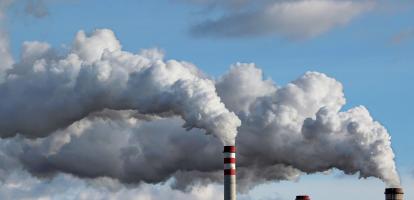 From: Amin Mawani To: Canadian Security Administrators Date: November 5, 2021 Re: Let’s Focus On Scope 1 Measures of Carbon Emissions The Canadian Securities Administrators (CSA) is seeking comments on its proposal for carbon emission reporting by firms listed on Canadian stock exchanges, part of the worldwide move to mandatory climate-related disclosure. In its call for consultation two weeks […]
 Funk, Lougheed, McCrimmon, Protti – Measurement and Regulation of Methane Emissions
 From: Wes Funk, Stephen Lougheed, Tracey McCrimmon and Gerard Protti To: Environment Minister Steven Guilbeault and Natural Resources Minister Jonathan Wilkinson Date: November 1, 2021 Re: Measurement and Regulation of Methane Emissions As you represent Canada at COP 26 in Glasgow over the next two weeks, there is a significant opportunity to reinforce Canada’s support […]
 Il est minuit moins une, que fait votre argent? – La Presse Opinion
Que fait votre argent pour sauver la planète alors que s’ouvre la COP26, la conférence de la dernière chance pour limiter le réchauffement climatique?
Une bonne partie de votre épargne, celle qui assure(ra) votre chèque du Régime de rentes du Québec, est gérée par la Caisse de dépôt et placement, qui a récemment décidé de vendre ses dernières actions dans le pétrole, mais de conserver celles dans le gaz naturel et les pipelines.
La Caisse est l’une des 295 institutions financières de 40 pays qui, collectivement, gèrent des actifs supérieurs à 90 000 milliards de dollars américains, et qui se sont engagées à atteindre la carboneutralité de leur portefeuille d’ici 2050, à se fixer une cible intérimaire pour 2030, à…