If Alberta doesn’t change how it requires companies to finance their own oil and gas well cleanup costs, the energy industry and, ultimately, taxpayers in Alberta face cleanup costs of up to $8 billion, according to a report by the C.D. Howe Institute. In “All’s Well that Ends Well: Addressing End-of-Life Liabilities for Oil and […]
From: Sharon Mascher To: The Honourable Minister of Environment and Climate Change and the Canadian Environmental Assessment Agency Date: September 27, 2017 Re: Defining a Threshold for a Credible Federal Impact Assessment Process Last June, the Government of Canada released a discussion paper on environmental and regulatory reviews outlining a series of system-wide changes “to strengthen Canada’s environmental assessment […]
From: Peter Tertzakian To: NAFTA Negotiators/ Concerned Canadians Date: September 22, 2017 Re: Oil Under the NAFTA Microscope As NAFTA talks resume this weekend in Ottawa, oil is visible under negotiators’ microscopes. Last year, the bilateral trade of energy (including natural gas, oil and power) between the US and Canada was about $55 billion (all […]
From: Blake Shaffer To: Glenn Thibeault, Ontario Minister of Energy and Rosemarie Leclair, Chair of the Ontario Energy Board Date: September10, 2017 Re: An Ontario surprise: a good idea about electricity pricing There is no shortage of Ontario electricity policies to criticize, butthe Ontario Energy Board’s (OEB) recently announced pilot programs to test new ways to […]
From: Benjamin Dachis To: Canadian Energy Producers Date: September 4, 2017 Re: Hurricane Harvey Shows the Risk of Having Few Pipelines Canadians were spectators as Hurricane Harvey ravaged south Texas, but the storm shows the long-term risk of being reliant on our oil exports going to a single country. Alberta sent about 80 percent of […]
From: Michael Trebilcock To: Glenn Thibeault, Ontario Minister of Energy Date: August 21, 2017 Re: Ontario`s self-defeating green energy program In 2009 the Ontario government committed ratepayers to massive subsidization of various forms of renewable energy, especially wind power and solar energy, along with the phasing out of coal-fired generation in the province – a […]
After eight years, Ontario’s green energy policies have yielded moderate environmental gains while drastically increasing energy prices, says a new report from the C.D. Howe Institute. In “Ontario’s Green Energy Experience: Sobering Lessons for Sustainable Climate Change Policies” author Michael Trebilcock, prominent law and economics expert, measures the success of the Green Energy and Green Economy […]
From: James Coleman To: The New B.C. Government Date: July 7, 2017 Re: Be Careful What You Wish For: Energy Transport Investors Need Certainty to Build the New Energy Economy The Kinder Morgan Trans Mountain pipeline has been approved by the federal government, which has exclusive authority to authorize interprovincial projects. Nevertheless, the new NDP-Green […]
From: Sarah M. Jordaan To: The Hon. Jim Carr, Minister of Natural Resources, the Hon. Catherine McKenna, Minister of Environment and Climate Change and Peter Watson, Chair of the National Energy Board Date: June 28, 2017 Subject: From Laggard to Leader – Canada as Champion of the Paris Agreement? Canada made a strong presence in […]
Consumers would likely enjoy lower power bills if provincial governments welcomed more private investment in electricity utilities, according to a new report from the C.D. Howe Institute. In “Adding More Juice: How Private Investors can Improve the Performance of Provincial Power Assets,” author Steven Robins shows how provinces can shift the risk of mistaken demand […]
From : Pierre-Olivier Pineau, Erick Lachapelle, Jacques Papy, Hélène Trudeau To: Concerned Canadians Date: June 26, 2017 Re: What GHG Emitters in Quebec Really Think About Carbon Pricing Everyone has an opinion on carbon pricing. Yet little is known about the views of companies actually subject to it. We conducted a survey of 56 large […]
To read the English version, click here. Expéditeur : Vincent Thivierge Destinataire : Citoyens concernés et entreprises assujetties au SPEDE Date : 21 juin 2017 Object : Les raisons de ne pas craindre l’importation québécoise de permis de GES Le marché du carbone québécois a mauvaise presse ces derniers temps. Le marché québécois est lié à la Californie et […]
Membership Application
Interested in becoming a Member of the C.D. Howe Institute? Please fill out the application form below and our team will be in touch with next steps. Note that Membership is subject to approval.
"*" indicates required fields
Member Login
Not a Member yet? Visit our Membership page to learn more and apply.




 If Alberta doesn’t change how it requires companies to finance their own oil and gas well cleanup costs, the energy industry and, ultimately, taxpayers in Alberta face cleanup costs of up to $8 billion, according to a report by the C.D. Howe Institute. In “All’s Well that Ends Well: Addressing End-of-Life Liabilities for Oil and […]
  From: Sharon Mascher To: The Honourable Minister of Environment and Climate Change and the Canadian Environmental Assessment Agency Date: September 27, 2017 Re: Defining a Threshold for a Credible Federal Impact Assessment Process Last June, the Government of Canada released a discussion paper on environmental and regulatory reviews outlining a series of system-wide changes “to strengthen Canada’s environmental assessment […]
  From: Peter Tertzakian To: NAFTA Negotiators/ Concerned Canadians Date: September 22, 2017 Re: Oil Under the NAFTA Microscope As NAFTA talks resume this weekend in Ottawa, oil is visible under negotiators’ microscopes. Last year, the bilateral trade of energy (including natural gas, oil and power) between the US and Canada was about $55 billion (all […]
  From: Blake Shaffer To: Glenn Thibeault, Ontario Minister of Energy and Rosemarie Leclair, Chair of the Ontario Energy Board Date: September10, 2017 Re: An Ontario surprise: a good idea about electricity pricing There is no shortage of Ontario electricity policies to criticize, butthe Ontario Energy Board’s (OEB) recently announced pilot programs to test new ways to […]
  From: Benjamin Dachis To: Canadian Energy Producers Date: September 4, 2017 Re: Hurricane Harvey Shows the Risk of Having Few Pipelines Canadians were spectators as Hurricane Harvey ravaged south Texas, but the storm shows the long-term risk of being reliant on our oil exports going to a single country. Alberta sent about 80 percent of […]
  From: Michael Trebilcock To: Glenn Thibeault, Ontario Minister of Energy Date: August 21, 2017 Re: Ontario`s self-defeating green energy program In 2009 the Ontario government committed ratepayers to massive subsidization of various forms of renewable energy, especially wind power and solar energy, along with the phasing out of coal-fired generation in the province – a […]
 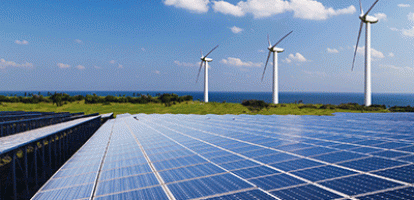 After eight years, Ontario’s green energy policies have yielded moderate environmental gains while drastically increasing energy prices, says a new report from the C.D. Howe Institute. In “Ontario’s Green Energy Experience: Sobering Lessons for Sustainable Climate Change Policies” author Michael Trebilcock, prominent law and economics expert, measures the success of the Green Energy and Green Economy […]
  From: James Coleman To: The New B.C. Government Date: July 7, 2017 Re: Be Careful What You Wish For: Energy Transport Investors Need Certainty to Build the New Energy Economy The Kinder Morgan Trans Mountain pipeline has been approved by the federal government, which has exclusive authority to authorize interprovincial projects. Nevertheless, the new NDP-Green […]
 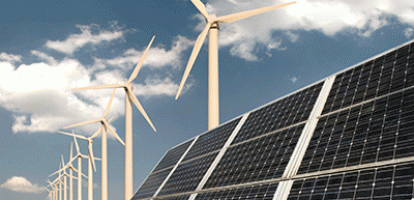 From: Sarah M. Jordaan To: The Hon. Jim Carr, Minister of Natural Resources, the Hon. Catherine McKenna, Minister of Environment and Climate Change and Peter Watson, Chair of the National Energy Board Date: June 28, 2017 Subject: From Laggard to Leader – Canada as Champion of the Paris Agreement? Canada made a strong presence in […]
  Consumers would likely enjoy lower power bills if provincial governments welcomed more private investment in electricity utilities, according to a new report from the C.D. Howe Institute. In “Adding More Juice: How Private Investors can Improve the Performance of Provincial Power Assets,” author Steven Robins shows how provinces can shift the risk of mistaken demand […]
  From : Pierre-Olivier Pineau, Erick Lachapelle, Jacques Papy, Hélène Trudeau To: Concerned Canadians Date: June 26, 2017 Re: What GHG Emitters in Quebec Really Think About Carbon Pricing Everyone has an opinion on carbon pricing. Yet little is known about the views of companies actually subject to it. We conducted a survey of 56 large […]
  To read the English version, click here. Expéditeur : Vincent Thivierge Destinataire : Citoyens concernés et entreprises assujetties au SPEDE Date : 21 juin 2017 Object : Les raisons de ne pas craindre l’importation québécoise de permis de GES Le marché du carbone québécois a mauvaise presse ces derniers temps. Le marché québécois est lié à la Californie et […]