



Jeremy Kronick on BNN – Growth in Non-bank Financial Intermediaries Could Weaken Monetary Policy
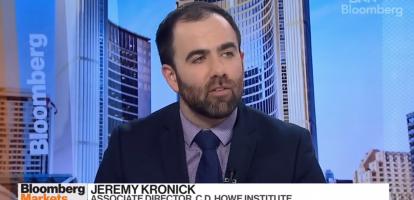
Jeremy Kronick, Associate Director of Research at the C.D. Howe Institute, joins BNN Bloomberg to discuss the rapid growth of the non-bank financial intermediation sector and its possible impact on the Bank of Canada’s monetary policy use.
John D. Murray – Central Banks and the Future of Money
 From: John D. Murray To: Canadian financial regulators Date: January 31, 2020 Subject: Central Banks and the Future of Money Central banks around the world are now giving serious consideration to the pros and cons of making central bank digital currencies (CBDCs) available to the general public. While the consensus view in earlier periods seemed to be that any […]
 Jeremy Kronick on BNN – Income inequality has flatlined since financial crisis
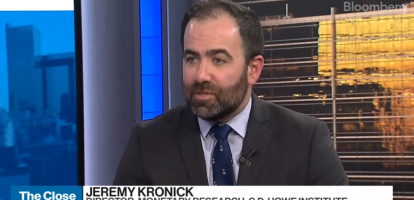
Jeremy Kronick, Associate Director of Research at the C.D. Howe Institute, joins BNN Bloomberg to discuss the link between monetary policy, income inequality and inflation in Canada.
One More Case for Longer-Term Mortgages: Financial Stability
 Longer-term mortgages would enhance both consumer choice and financial stability, but regulatory changes are needed to help them develop into a significant part of the Canadian residential mortgage market, says a new report from the C.D. Howe Institute. In “One More Case for Longer-Term Mortgages: Financial Stability,” author Michael K. Feldman notes that according to […]
 Modernizing the regulation of financial advice – Globe and Mail Op-Ed
Canada’s investment advisory industry has evolved through consolidation and new products to meet the needs of a more demanding and active investing public over the past two decades. Unfortunately, its regulatory structure has not kept pace. Overlapping regulatory organizations and outdated rules are limiting innovation and efficiency.
Unlike sectors in which industry must petition government agencies for regulatory relief, companies in the investment and mutual-fund industry can propose a better solution for the sector and Canadian investors. And as I argue in a recent C.D. Howe Institute report, the time is ripe for a merger.
First, a little background. The bulk of the financial advice industry operates through dealer…
Requiring the Bank of Canada to follow a financial stability mandate is a bad idea – Globe and Mail Op-Ed
In the coming months, the Bank of Canada‘s mandate to target inflation is coming up for review. Some have suggested that the mandate should be expanded to include responsibility for financial stability, defined as heading off the imbalances that could trigger a severe financial crisis, such as what the world experienced just more than a decade ago. In a recent C.D. Howe Institute report, we argue, marshalling historical and empirical evidence, that granting the Bank an explicit mandate to target financial stability is not a good idea, and that doing so would create a conflict with its tried and true mandate for price stability.
Calls for central banks to take on responsibility for maintaining financial stability are…
Omran, Kronick – The Productivity Opportunity In Canada’s Financial Sector
 From: Farah Omran and Jeremy Kronick To: The Hon. Bill Morneau, Minister of Finance Date: November 21, 2019 Re: The Productivity Opportunity in Canada’s Financial Sector Productivity improvement is a central challenge to Canada, and its financial services sector is the proverbial low-hanging fruit. The sector not only employs relatively more educated workers and generates higher earnings than […]
 Glen Hodgson – Creating A Policy Framework For Sustainable Green Finance
 From: Glen Hodgson To: Canadians interested in sustainable finance Date: November 20, 2019 Re: Creating a policy framework for sustainable green finance Action on green finance is taking place in many places and in many directions, but there are still many gaps, with no coherent policy framework in place. What would such a framework look like? The expert […]
 The Bank of Canada and Financial Stability: A New Mandate?
 The Bank of Canada’s current mandate should not be expanded to include financial stability, says a new report from the C.D. Howe Institute. In “The Bank of Canada and Financial Stability: A New Mandate?,” authors Michael D. Bordo and Pierre L. Siklos marshal historical and empirical evidence to make the case that the Bank of […]
 Our Financial System Saved Us From The Worst Of The 2009 Crisis, Now It’s Holding Our Economy Back – Financial Post Op-ed
Discussion of Canada’s lagging productivity performance was missing from the recent federal election campaign, which is perhaps no surprise. It’s not a subject that lends itself to daily announcements and photo ops. But now that the electoral dust has settled it’s time to take steps to address the issue.
There is no better place to start than to boost productivity in the financial services sector, where Canada possesses an international comparative advantage. The sector not only employs relatively more educated workers and generates higher earnings than the rest of the economy, it has the unique ability to boost the entire economy’s productivity while boosting its own.
Surprisingly, however, the financial services sector’s…
Ripe for Reform: Modernizing the Regulation of Financial Advice
 Streamlining the regulation of financial advice could create a more finely tailored, fit-for-purpose oversight regime, says a new report from the C.D. Howe Institute. In “Ripe for Reform: Modernizing the Regulation of Financial Advice,” author Joanne De Laurentiis argues merging and rationalizing financial advice regulators would eliminate rule overlap, remove operational costs for dealers and […]
 Productivity and the Financial Services Sector – How to Achieve New Heights
 Restrictive rules holding back innovation in the financial sector should be updated to bolster Canada’s productivity, says a new report from the C.D. Howe Institute. In “Productivity and the Financial Services Sector – How to Achieve New Heights,” authors Farah Omran and Jeremy Kronick note that over the past 15 years Canada has lagged behind […]