


Canada’s Foggy Economic and Fiscal Future
 by Don Drummond The pandemic has highlighted and amplified the economic, social and health vulnerability of many Canadians. There is much that should be done. But how much can be tackled without risking large costs in the future? And what are the most effective and efficient approaches? Canadians should weigh in on such questions before […]
La bidenomie et nous – La Presse Opinion
Bidenomie, n. f. Mot-valise formé par la contraction des mots Biden et économie.
Il est opportun d’introduire ce néologisme pour explorer ce que le candidat démocrate à la présidence des États-Unis compte faire de l’économie de notre puissant voisin. La Bidenomics est d’ailleurs le dernier terme à la mode dans les médias de langue anglaise pour désigner son programme économique.
Deux mises en garde s’imposent avant de plonger dans le sujet. Premièrement, le président propose, mais le Congrès dispose en matières législative et budgétaire, prescrit la Constitution américaine. Si le Sénat ne tombe pas aux mains des démocrates, on peut parier que plusieurs ambitions de la Bidenomie s’échoueront sur les récifs…
Jenkins, Kronick – Health And The Economy – With Numbers
 From: Paul Jenkins and Jeremy M. Kronick To: Canadian policymakers Date: October 5, 2020 Re: Health and the Economy – With Numbers When the pandemic nature of the COVID-19 virus was finally recognized, Canada acted boldly to contain and control its spread. We didn’t know as much as we know now, and as such we were forced into unmeasurable […]
Bill Robson on BNN – Canadians are now ‘desensitized’ despite ‘very serious’ deficit numbers
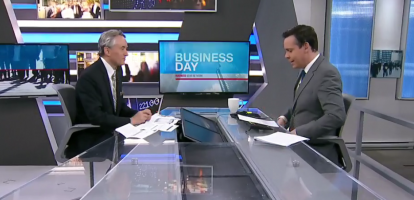
Bill Robson, CEO at C.D. Howe Institute, joins BNN Bloomberg with his take on the nearly $27 billion cost of Ottawa’s COVID-19 benefits. He says that governments’ big budget misses are not just a COVID problem and that these misses are not appropriate if we think of all the stakes.
Busted Budgets: Canada’s Senior Governments Can’t Stick to Their Fiscal Plans
 The Study In Brief In theory, the management of public funds by Canada’s senior governments – federal, provincial and territorial – reflects the preferences of Canadians, expressed through their elected representatives. In practice, however, the revenues and expenses of senior governments – and the differences between them, which affect each government’s net worth and capacity […]
William B.P. Robson – Will It Take Outrage At Waste To Stop The Federal Government’s Borrowing Binge?
 From: William B.P. Robson To: Members of Parliament Date: September 24, 2020 Re: Will It Take Outrage at Waste to Stop the Federal Government’s Borrowing Binge? The $343 billion deficit for the 2020/21 fiscal year, announced in the federal government’s July fiscal snapshot, was shocking at the time. Partly it was the number itself, which implied that debt […]
Luc Godbout – A Quebec Model For A Fiscal Anchor
 From: Luc Godbout To: The Hon. Chrystia Freeland, Minister of Finance Date: September 21, 2020 Re: A Quebec model for a fiscal anchor It’s important for governments to have fiscal targets. It’s a credibility issue for federal government, not only with the rating agencies, but also with the public. To guard against a downgrade of rating agencies, the federal […]
What Will Stop Ottawa’s Debt Binge? – Globe And Mail Op-ed
The $343-billion deficit for this fiscal year, announced in July by former finance minister Bill Morneau in his fiscal snapshot, was shocking at the time. Partly it was the number itself, which implied that debt would top $1-trillion before year-end. And because, with no budget or even a fiscal plan out of Ottawa this year, the tally was incomplete. Now Mr. Morneau is gone, and his replacement, Chrystia Freeland, has signalled at least another $40-billion in new spending – which will push the borrowing higher yet.
The 2015 election commitment to run “modest deficits” was a politically clever wedge issue – a pledge the Conservatives did not want to make, and the NDP dared not make. And borrowing in the depths of the COVID-19…
Ken Boessenkool and Miles Corak on The Agenda – Basic Income and the Future of Work
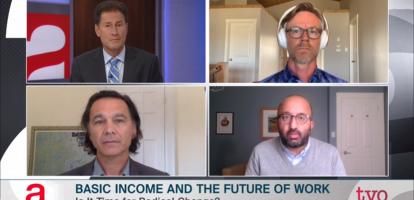
Ken Boessenkool and Miles Corak, Research Fellows at the C.D. Howe Institute, join TVO’s The Agenda to talk basic income and the future of work.
Hugh O’Reilly on BNN – We need a fiscal plan that sets targets

Hugh O’Reilly, Executive Director at Innovate Cities and Senior Fellow at the C.D. Howe Institute, shares with BNN Bloomberg what Canada’s economic recovery plan needs to look like.
The crucial distinctions the Supreme Court should make about the federal carbon-pricing backstop – Globe and Mail Op-Ed
Against the stark backdrop of intensifying climate change, the Supreme Court will begin hearing arguments on Tuesday concerning the constitutionality of the Greenhouse Gas Pollution Pricing Act – what is known as the federal carbon-pricing backstop.
The hearing comes after a long saga of proceedings through provincial courts of appeal, and the decision will invariably be historic in how it shapes the way our country regulates carbon emissions in the decades to come. In Ontario and Saskatchewan, majority decisions upheld the backstop, finding that Ottawa had jurisdiction for the legislation under the “national concern” branch of the federal peace, order and good government power; in Alberta, the court found that it would…
Bev Dahlby – On Fiscal Anchors
 From: Bev Dahlby To: Canadian debt watchers Date: September 16, 2020 Re: On Fiscal Anchors Current low interest rates have led to complacency concerning government deficits and higher levels of public debt. However, the debt sustainability equation is only an accounting relationship and does not incorporate the economic impacts of increased borrowing. Even if the debt-to-GDP ratio is falling […]