



Beyond tightening, where is the end point of the Bank of Canada’s monetary policy? – Globe and Mail
The Bank of Canada once again held its policy rate at 5 per cent on Wednesday, as expected.
After two months of disappointment, with the annual change in the Consumer Price Index ticking up in July and August, inflation resumed its descent in September, falling to 3.8 per cent from 4 per cent. That, plus weak economic numbers, made it practically certain – confirmed by the expectations of financial markets – that the central bank would hold.
The real questions concern the bank’s end point for monetary policy in the medium term and what that means for Canadians.
The bank is probably at the end of its tightening cycle. But this doesn’t mean interest rates are coming back down to where they were before…
Balance of data shows rate hikes are starting to work: C.D. Howe’s Jeremy Kronick
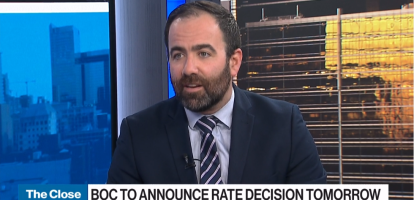 Jeremy Kronick, Associate Vice President and Director of the Centre on Financial and Monetary Policy at the C.D. Howe Institute, tells BNN Bloomberg that the Bank of Canada should hold rates at their current level tomorrow, but there’s also a chance they might hike again in this tightening cycle. He points to the job market and wage growth as areas of concern.
 Janet Cosier – Central Bank Risk Management in Times of Turbulence
From: Janet Cosier To: Bank of Canada Watchers Date: October 10, 2023 Re: Central Bank Risk Management in Times of Turbulence Over the last year, the world’s central banks have started to report negative equity positions, a product of sharply increasing interest rates that have created mismatches on their balance sheets. In many instances, these mismatches have arisen […]Losses, Risks and Reputation: Bolstering the Bank of Canada for the Road Ahead
 Central banks around the world, including the Bank of Canada, are dealing with a hangover from the quantitative easing (QE) policies undertaken during the pandemic. Ensuing inflation and interest-rate hikes have created balance sheet mismatches and net interest losses. As an example, the interest rate the Bank of Canada earns on its bond portfolio is […]
 Ambler and Kronick – In Praise of the Pause
From: Steve Ambler and Jeremy M. Kronick To: Monetary Policy Observers Date: September 12, 2023 Re: In Praise of the Pause The Bank of Canada held its policy rate at 5 percent last week – a smart move. Although the Bank’s governing council may have made its decision ahead of the weak GDP the week before, those numbers underlined the reasons to hold. […]Tiff Macklem reads the tea leaves: Bank of Canada was right to hit pause on interest rates – Globe and Mail
The Bank of Canada held its policy rate at 5 per cent Wednesday – a smart move.
Although the central bank’s governing council may have made its decision ahead of the weak GDP numbers released last week, those numbers underlined the reasons to hold. Real GDP contracted at an annualized rate of 0.2 per cent in the second quarter of 2023 and fell 0.2 per cent month-over-month in June (annualized as well). Looking ahead, Statistics Canada’s advanced estimate for July was flat. The household consumption the bank has been battling finally seems to be flagging. Data on bank deposits and job vacancies also testify to an economy losing steam.
Monetary policy works with a lag, and these latest figures suggest…
Today’s BoC pause is more data-dependent than the one in March: C.D. Howe’s Jeremy Kronick
 Jeremy Kronick, director of monetary and financial services research at the C.D. Howe Institute, joins BNN Bloomberg to discuss the Bank of Canada’s decision to hold its key interest rate at 5 per cent. He says the BoC would have noted signs of slower spending and softening in the job market, and adds the central bank’s restrictive policy will take some more time to work through the economy. He says there are already signs that Q3 GDP growth could be negative, but it’s tough to call a technical recession amidst a strong labour market.
 Kronick, Ambler – The Last Spike for the Bank?
To: Inflation Watchers From: Jeremy M. Kronick and Steve Ambler Date: July 17, 2023 Re: The Last Spike for the Bank? Last Wednesday, the Bank of Canada increased its policy rate to 5 percent, a level not seen since March 2001. Citing continuing tightness in labour markets and still-firm consumer spending, the Bank reasoned there is still excess […]Bank of Canada’s latest interest rate hike may be one too many – Globe and Mail
On Wednesday, the Bank of Canada increased its policy rate to 5 per cent, a level not seen since March, 2001. Citing continuing tightness in labour markets and still-firm consumer spending, the bank reasoned there is still excess demand in Canada’s economy, and that Wednesday’s rate hike was necessary to continue to bring activity in line with productive potential. But if that adjustment is already happening, this hike may turn out to be one too many.
Among the many challenges a central bank faces in a fight against high inflation is the mixed signals it gets as it hikes rates to get inflation down. In Canada, the year-over-year headline inflation rate fell to 3.4 per cent in May. However, most of that was driven by a fall in…
I’m not convinced the earlier rate hikes have worked their way through: Economist Jeremy Kronick
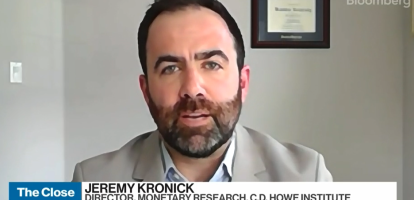 Jeremy Kronick, director of monetary and financial services research at the C.D. Howe Institute, joins BNN Bloomberg to preview the Bank of Canada’s next rate decision due on Wednesday, and explains why he believes there is no need for further interest rate hikes at this time.
 C.D. Howe Institute Monetary Policy Council Says Bank of Canada Should Raise Overnight Rates to 5.00 Percent until Early 2024, Cut to 4.25 Percent by July of 2024
July 6, 2023 – The C.D. Howe Institute’s Monetary Policy Council (MPC) recommends that the Bank of Canada raise its target for the overnight rate, its benchmark policy interest rate, to 5.00 percent on July 12th. The MPC further recommends that the Bank keep the target at 5.00 percent at least until January of 2024, then reduce it to 4.25 percent by July of 2024.
The MPC provides an independent assessment of the monetary stance consistent with the Bank of Canada’s 2 percent inflation target. William Robson, the Institute’s CEO, chairs the Council.
Council members make recommendations for the Bank of Canada’s upcoming interest-rate announcement, the subsequent announcement, and the announcements six months…
Slaying the Beast with Jeremy Kronick and Steve Ambler

Could the Bank of Canada seen the inflation beast coming? C.D. Howe Institute’s Jeremy Kronick and Steve Ambler tell host Michael Hainsworth that the Institute saw several signs of it rearing its ugly head long before the Bank raised borrowing costs. But what about now?