



Jeremy Kronick on BNN – Lessons learned from the Bank of Canada and U.S. Federal Reserve’s inflation fight so far
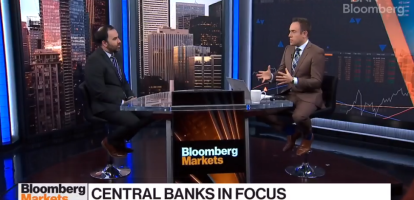
Jeremy Kronick, Director of Monetary and Financial Services Research at the C.D. Howe Institute, recently joined BNN Bloomberg to talk about the lessons learned from the Bank of Canada’s inflation fight and how it differs from the U.S. Federal Reserve.
Jeremy Kronick on BNN – BoC says Inflation, Financial Stress Affecting Rate Plans

Jeremy Kronick, Director of Monetary and Financial Services Research at the C.D. Howe Institute, recently joined BNN Bloomberg to discuss Bank of Canada Governor Tiff Macklem’s speech on balancing inflation with systemic risks.
Slaying the Beast: The Bank of Canada’s Ongoing Battle with Inflation
 The surge of inflation as economies recovered from the COVID lockdowns of 2020 and 2021 took central bankers and most other observers by surprise. Canada was no exception. Year-over-year CPI inflation rose from -0.4 percent at its nadir in May 2020, to a peak of 8.1 percent in June 2022 before finishing 2022 at 6.3 […]
 Did the U.S. financial crisis make the Bank of Canada’s job easier? – Financial Post Op-Ed
Last week, the Bank of Canada held its overnight rate, its benchmark policy rate, at 4.5 per cent. No surprises there. In its last announcement, the bank told us the data were consistent with their view that, with the target rate where it is, inflation would come back down to three per cent by the middle of this year. Data since have not changed governing council’s view that at present more tightening wasn’t necessary.
In fact, if anything, the major economic development over the last six weeks, the failures of Silicon Valley Bank (SVB) and Signature Bank, as well as the emergency takeover of Credit Suisse by UBS Group AG, made caution even more prudent. Furthermore, it might actually make the…
Don Drummond – It was Hard, but the Bank of Canada was Right to Hold its Course on Interest Rates
From: Don Drummond To: Interest rate observers Date: April 19, 2023 Re: It was Hard, but the Bank of Canada was Right to Hold its Course on Interest Rates At its interest-rate setting on March 8, the Bank of Canada paused its months-long hiking campaign and left unchanged its target for the overnight interest rate at 4.5 percent. Being […]Are Interest Rates Now High?
 The Bank of Canada’s key policy interest rate, the target for the overnight rate, is now 425 basis points higher than in early March 2022 (0.25 to 4.5 percent). The sharp increase has led to a perception interest rates are now high and some puzzlement that has not dampened economic activity more. But are interest […]
 Bank of Canada was right to hold interest rates steady, even if that was difficult – Globe and Mail Op-Ed
At its last interest rate setting on March 8, the Bank of Canada paused its months-long hiking campaign and left unchanged its target for the overnight interest rate at 4.5 per cent. Being on the fence can be uncomfortable in the current inflationary environment – but for the latest rate setting on Wednesday, the bank was right to remain there.
Perching on the fence is uncomfortable for many reasons. First is the long lag time between setting interest rates and seeing the result. It can take 18 months or more for changes in interest rates to affect economic activity and then inflation. The bank’s rate hikes over the past year are moving inflation in the right direction. The year-over-year rate of…
Ambler, Kronick – The Bank of Canada Didn’t Follow the Fed Last Week: A Good Call
From: Steve Ambler and Jeremy M. Kronick To: Bank of Canada Observers Date: March 14, 2023 Re: The Bank of Canada Didn’t Follow the Fed Last Week: A Good Call Bank of Canada governor Tiff Macklem and the Bank’s Governing Council held course last week, leaving their target for the overnight rate unchanged at 4.5 percent. The day […]C.D. Howe Institute Monetary Policy Council Calls for Bank of Canada to Hold Overnight Rate at 4.50 Percent through September, Cut to 4.25 Percent by March of 2024
March 2, 2023 – The C.D. Howe Institute’s Monetary Policy Council (MPC) recommends that the Bank of Canada hold its target for the overnight rate, its benchmark policy interest rate, at 4.50 percent on March 8th, and keep it at that level for the next six months. By March of 2024, the Council recommends a cut to 4.25 percent.
The MPC provides an independent assessment of the monetary stance consistent with the Bank of Canada’s 2 percent inflation target. William Robson, the Institute’s CEO, chairs the Council.
Council members make recommendations for the Bank of Canada’s upcoming interest-rate announcement, the subsequent announcement, and the announcements six months and one year ahead. The Council’s formal…
Ambler, Kronick – Five Reasons the Inflation Worst is Over
From: Steve Ambler and Jeremy M. Kronick To: Bank of Canada Observers Date: February 17, 2023 Re: Five Reasons the Inflation Worst is Over The Bank of Canada met market expectations with its last interest rate hike, lifting its policy rate by 25 basis points, to 4.5 percent. The Bank also changed its tone from hesitant caution to guarded […]Jeremy Kronick on BNN – Explaining the Bank of Canada’s Latest Transparency Experiment

The Bank of Canada released minutes of its January 25 interest rate meeting this week. Our Jeremy Kronick outlined the benefits and risks of this first-ever initiative for a BNN Bloomberg television audience.
The Bank of Canada is right to ease off the brakes and see what happens – Financial Post Op-Ed
The Bank of Canada met market expectations last week by raising its policy rate by 25 basis points, to 4.5 per cent. The bank also changed its tone from hesitant caution to guarded optimism. Its message: Hikes might just be over.
In December, the bank made clear that any further tightening would depend on the data. This time, it stressed that if inflation declines in key sectors to the extent it forecast in its latest Monetary Policy Report, it will hold the policy rate steady and pause to assess the impact of its cumulative rate hikes. A terminal peak of 4.5 per cent would also be in line with the most recent C.D. Howe Institute Monetary Policy Council announcement.
We expect — as most Canadians…