



Jon Johnson – Biden Administration’s Flawed Bill H.R. 5376 – US international obligations must be respected
From: Jon Johnson To: The US Senate Date: November 25, 2021 Re: Biden Administration’s Flawed Bill H.R. 5376 – US international obligations must be respected Without any Republican support, the House has now passed the Biden Administration’s Bill H. R. 5376. This legislation requires confirmation by the Senate before becoming law. The Senate can approve […]The WTO’s next meeting comes at a critical moment for global trade and the organization itself – Globe and Mail Op-Ed
While some may have been disappointed by the recent COP26 in Glasgow, Scotland, it has delivered on many promises, creating expectations for the next major global gathering – the World Trade Organization’s all-important 12th Ministerial Conference (MC12), to be held in Geneva from Nov. 30 to Dec. 3.
The first meeting of WTO trade ministers in four years, the talks will test the political skills of the new WTO director-general, Ngozi Okonjo-Iweala, in getting consensus on a range of contentious issues. Restoring the organization’s diminishing relevance and showing it can be responsive to today’s pressing global issues (trade and climate change being at the forefront) represents a daunting challenge
American leadership on…
Jon Johnson – US Infrastructure Legislation – Massive Buy America, Some Acknowledgement of US International Obligations
From: Jon Johnson To: Global Affairs Canada Date: November 23, 2021 Re: US Infrastructure Legislation – Massive Buy America, Some Acknowledgement of US International Obligations The Biden administration’s infrastructure package is now, finally, enacted. Title IX of the legislation, labelled Build America, Buy America, sets out 57 pages of requirements that elaborate on earlier US laws requiring that […]Jon Johnson – Section 232 Tariffs – Pathway to Climate Protection or Managed Trade?
 From: Jon Johnson To: US Trade Policy Observers Date: November 11, 2021 Re: Section 232 Tariffs – Pathway to Climate Protection or Managed Trade? On October 30, the US and the EU announced a deal that replaces Trump-era US tariffs on EU steel and aluminum under Section 232 of the Trade Expansion Act of 1962 […]
 Canada has to transform its economy – or be left behind – Globe and Mail Op-Ed
Canadian governments are counting on strong economic growth to reduce debt burdens that ballooned during the pandemic. But realizing that growth depends on how well Canadian businesses adapt to rapidly changing market realities.
In the near term, Canada’s economic recovery looks promising as business activity bounces back.
In the longer term, however, Canada’s economy faces strong headwinds that are not being factored into government projections. Canada’s economic challenges go beyond slowing labour force growth and modest productivity gains. Fiscal recovery forecasts do not consider the probability of more frequent and costly natural disasters or the implications of the global economic transformation to stave off the…
Lawrence Herman – On the Persistence of Trade Sanctions
From: Lawrence Herman To: Canadians concerned about the trading system Date: October 25, 2021 Re: On the Persistence of Trade Sanctions While governments struggle to find consensus in the lead-up to the World Trade Organization’s (WTO) critical ministerial conference (MC12) at the end of November, there is a highly significant global development that won’t even be touched on at […]Jon Johnson – The Battle over Country of Origin Labelling Makes its Return
From: Jon Johnson To: President Joe Biden Cc: Global Affairs Canada and Secretaria de Comercio y Fomento Industrial (SECOFI) Date: September 28, 2021 Re: The Battle over Country of Origin Labelling Makes its Return The Farm System Reform Act of 2021 introduced by Senators Cory Booker, Elizabeth Warren and Bernie Sanders, if enacted, would reignite the […]Whatever happens at the WTO, unilateral economic sanctions and embargoes are here to stay – Globe and Mail Op-Ed
While governments struggle to find consensus in the lead-up to the World Trade Organization’s (WTO) critical ministerial conference (MC12) in November, there is a highly significant global development that won’t even be touched on at the meeting: the spread of trade embargoes and economic sanctions.
Used mostly by Western governments, these tools are aimed at combatting terrorism, preventing the spread of weapons of mass destruction, penalizing human rights abuses and environmental degradation, fighting drug trafficking and other actions by unsavoury foreign governments, companies and individuals.
In today’s fraught and increasingly fractured world order, with reduced efficacy of multilaterally-agreed rules, unilateral…
Trebilcock, Poliwoda – The Trips Vaccine Waiver Controversy
 From: Michael J. Trebilcock and Dan Poliwoda To: Canadians concerned about vaccine equity Date: September 23, 2021 Subject: The TRIPS Vaccine Waiver Controversy The vastly differing rate at which developed and developing countries have been able to procure COVID-19 vaccines has exposed major inequities in global vaccine access. In an effort to boost developing countries access to COVID-19 vaccines, […]
 Lawrence Herman – The Private Sector Role In Confronting China
 From: Lawrence Herman To: Prime Minister Justin Trudeau Date: July 14, 2021 Re: The Private Sector Role in Confronting China Much attention at last month’s G7 summit was focused on promoting free and fair trade in the post-pandemic world. While the word China never appeared in the final communiqué, G7 leaders clearly had it in mind. There’s a reference […]
 Jon Johnson – Special Committee Takes On Buy America
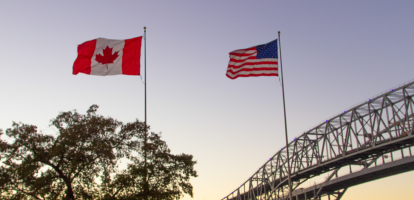 From: Jon Johnson To: Global Affairs Canada Date: July 5, 2021 Re: Special Committee Takes On Buy America The House of Commons Special Committee on the Economic Relationship between Canada and the United States has now issued its interim report on “Buy America” procurement policies based on testimony heard in April. Usefully, the report distinguishes […]
 Private Sector Has Important Role In Dealing With China’s Expansionist Ambitions – Globe And Mail Op-ed
A lot of attention at the Carbis Bay G7 summit was focused on promoting free and fair trade in the postpandemic world. While China wasn’t mentioned by name in the final communiqué, the G7 leaders clearly had China in mind. There’s a reference to getting countries to play by World Trade Organization rules, about greater regulations on state-owned enterprises, about controlling trade-distorting subsidies, about forced labour in supply chains – all of which have a clear, albeit unstated, China focus.
All of this attention at the summit, and indeed much of the public discussion on world trade, involves governmental action, meaning treaties and trade agreements of one sort or another, whether at the WTO or at the regional level,…