



Kronick, Ambler – No Rate Cut Yet. Here’s Why
To: Interest rate watchers From: Jeremy M. Kronick and Steve Ambler Date: March 13, 2024 Re: No Rate Cut Yet. Here’s Why Headline inflation in January moved back into the Bank of Canada’s 1 to 3-percent target range. Yet last week, the Bank again held steady on its overnight rate. Why is the Bank reluctant to cut? There are […]Lawrence Herman – Preserving Brian Mulroney’s Free Trade Legacy
From: Lawrence Herman To: Trade observers Date: March 12, 2024 Re: Preserving Brian Mulroney’s Free Trade Legacy There’s good reason to celebrate the late Brian Mulroney’s courage in embarking on the quest for a free-trade agreement with the Americans in his first term as prime minister. While eliciting strong opposition in many quarters at the time, it was a historically […]Reasons a Federal Budget After the Start of the Fiscal Year Could Be Cause for Concern: Don Drummond
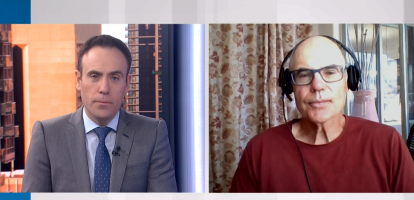
C.D. Howe Institute Fellow-In-Residence Don Drummond joined BNN Bloomberg to talk about the top fiscal considerations for Budget 2024 as well as the significance of the budget being released after the fiscal year begins.
Brian Livingston – The Real Story of the Future of EVs
 From: Brian Livingston To: Canadians interested in the future of EVs Date: March 11, 2024 Re: The Real Story of the Future of EVs C.D. Howe Institute author Brian Livingston responds to a critique of his publication. In a recent study for the C.D. Howe Institute, I highlighted the near-impossibility of procuring enough Zero Emission Vehicles […]
 Tammy Schirle – Are Jobs Becoming a Little Less ‘Greedy’?
 From: Tammy Schirle To: Canadians and policymakers concerned about gender equity Date: March 8, 2024 Re: Are Jobs Becoming a Little Less ‘Greedy’? Claudia Goldin, the most recent winner of the Nobel Prize in Economics, has suggested a large part of the remaining gender gaps we see in the labour market are really driven by […]
 Evaluating Wage Equality and Women’s Representation
 A significant amount of research investigates gender wage gaps, and there are several hypotheses to explain their persistence, including glass ceilings or sticky floors. A glass ceiling exists when the pay gap is significantly larger at the top of the earnings distribution, while a sticky floor is when the wage gap is larger at the […]
 How to lessen Ottawa’s addiction to income taxes – Financial Post
Looking around the OECD, Canada is an average-tax nation overall but relies far more on income taxes and much less on consumption levies than most other industrialized nations. Leaning so hard on income taxes hurts our economic performance.
Every tax creates economic distortions but some overused taxes are more damaging than others. By raising more of our revenue from the less damaging taxes we could improve economic performance without reducing public services.
The latest C.D. Howe Institute Shadow Budget proposes a simple change in the federal tax mix: raise the GST rate by two percentage points — back to its original rate of seven per cent. At the same time, cut the federal corporate rate by two percentage points and…
Faut-il déchirer sa chemise pour Northvolt ? – La Presse
Pas facile de se faire une tête dans ce dossier, où promoteurs et opposants présentent des arguments valables, mais aussi des positions critiquables. Prenons de la hauteur pour en juger.
L’argument central avancé dans ce journal par le ministre de l’Économie, de l’Innovation et de l’Énergie, Pierre Fitzgibbon, est de « développer au Québec une économie basée sur des secteurs d’avenir » et de « réduire notre écart de richesse avec le reste du Canada » pour financer la santé et l’éducation.
Des objectifs louables, certes, mais le gouvernement de la CAQ ne semble appliquer qu’une moitié de la stratégie préconisée pour lutter contre le réchauffement climatique, qui est de s’attaquer tant aux risques…
The Ontario Infrastructure Bank may hurt more than it helps – Financial Post
Wouldn’t it be great if more government infrastructure were built faster and cheaper? The Ontario government certainly thinks so and is creating the Ontario Infrastructure Bank (OIB) to get that done.
Unfortunately, inadequate funding is not the problem plaguing infrastructure investment. The province never comes close to spending the money it allocates to infrastructure. In 2022-23 alone, it underspent its infrastructure budget by a whopping $3.4 billion (15 per cent). Under-spending has happened every year in recent memory.
What’s more, increasing funding over time has not increased actual infrastructure output. According to Statistics Canada, the combined capital expenditures of all levels of government in Ontario have…
Jack Mintz – Let’s Abandon Vacant Property Taxes
 From: Jack Mintz To: Municipal housing watchers Date: March 7, 2024 Re: Let’s Abandon Vacant Property Taxes The latest fashion in tax grabs is the vacant property tax (VPT). In Vancouver it’s called the “empty home tax.” In Toronto it’s the “vacant home tax.” Whatever the name, taxing residential property that is not occupied for […]
 The case for an April interest-rate cut by Tiff Macklem – Globe and Mail
Headline inflation in January moved back into the Bank of Canada’s 1- to 3-per-cent target range. Yet on Wednesday, the bank again held its target for the overnight rate at 5 per cent.
Why is the bank reluctant to cut? There are two main impediments: core inflation, and concerns over expectations. Both are fair reasons to keep rates where they are, but both measures are easing or should ease soon. An April rate cut may therefore be in the cards.
The bank’s mandate is to target 2-per-cent headline inflation. But headline inflation contains a number of volatile items, such as energy, and so to get a sense of underlying price pressures, many central banks have measures of core inflation that strip away these components…
A Step Too Far: Enshrining Structural Presumptions Governing Mergers in the Competition Act is Not Good for Canada’s Competitiveness
 Competition law reform is proceeding in Canada in a piecemeal fashion involving three different bills. Bill C-56, An Act to amend the Excise Tax Act and the Competition Act, received Royal Assent on December 15, 2023. Bill C-59, The Fall Economic Statement Implementation Act, is currently at Second Reading in the House of Commons. Bill […]