



Joe McKinnon – It’s Time to Reprioritize Fundamental Research
 This week, we present the three top finishers in the C.D. Howe Institute Intelligence Memo competition, which was open to graduate students across the country. Today, our first co-winner. To: Canadian innovation policy leaders From: Joe McKinnon Date: October 23, 2023 Re: It’s Time to Reprioritize Fundamental Research Significant investments in fundamental research are needed […]
 Balance of data shows rate hikes are starting to work: C.D. Howe’s Jeremy Kronick
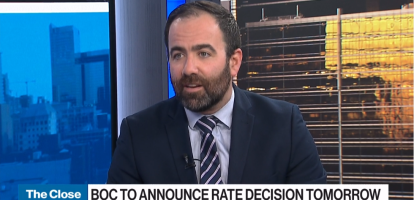 Jeremy Kronick, Associate Vice President and Director of the Centre on Financial and Monetary Policy at the C.D. Howe Institute, tells BNN Bloomberg that the Bank of Canada should hold rates at their current level tomorrow, but there’s also a chance they might hike again in this tightening cycle. He points to the job market and wage growth as areas of concern.
 Addy, Goldman – Four flaws in Ottawa’s New Competition Framework
To: Canadian businesses From: George N. Addy and Calvin Goldman Date: October 20, 2023 Re: Four flaws in Ottawa’s New Competition Framework If you own or run a business and if you are concerned about your commercially sensitive information you need to speak up now. The federal government’s new Competition Act amendments could result in […]Compared to its peers, Canada falls short on seniors’ care – Financial Post
Via the Canadian Institute for Health Research, Canada was an enthusiastic participant in the Commonwealth Fund’s ambitious 18,000-person 2021 survey of seniors in 11 wealthy nations.(Germany, Australia, Switzerland, New Zealand, the U.S., Norway, Canada, the U.K., France, Sweden and Netherlands). It asked 68 questions about people’s experience with and perception of the health-care system and the health-care providers they deal with.
In our recent C.D. Howe Institute paper, we focused on the results for seniors care. We used 49 indicators from the survey to create five summary categories: access to care, care process, equity, the impact of COVID-19 on seniors and the health status of seniors. Such…
Benjamin Dachis -The Proper Federal Role in Housing
To: Housing observers From: Benjamin Dachis Date: October 16, 2023 Re: The Proper Federal Role in Housing Although housing is mainly a provincial jurisdiction, the federal government is seized with the pressing political and policy problem of how to increase the housing stock, and sooner rather than later. Its proper housing role is to focus on areas of direct […]Schwanen, Robson and Bafale – Don’t Let the Dairy Lobby Win this Fight
 From: Daniel Schwanen, William B.P. Robson and Mawakina Bafale To: Canadian Senators Date: October 13, 2023 Re: Don’t Let the Dairy Lobby Win this Fight Amazingly, just as cost-of-living concerns are acute for Canadians and grocery prices are in the political cross-hairs, a bill has arrived in the Senate that would further entrench the supply-management restrictions that keep prices […]
 Luba Petersen Appointed C.D. Howe Research Fellow, Monetary Policy Council Member
We are pleased to announce Luba Petersen has joined the C.D. Howe Institute as a Research Fellow and a member of the Institute’s prestigious Monetary Policy Council. An Associate Professor in the Department…John Weekes – Making Supply Management Untouchable Would be a Big Mistake
From: John Weekes To: The Senate of Canada Date: October 13, 2023 Re: Making supply management untouchable would be a big mistake There are three major negative impacts embedded in Bill C-282, a trade bill awaiting Senate approval that would prevent Canadian trade negotiators from ever ceding any ground on supply management. First, gratuitously removing dairy, poultry and its […]Lawrence Herman – Foreign Agents Registry – Don’t Dither
From: Lawrence Herman To: Foreign interference observers Date: October 11, 2023 Re: Foreign Agents Registry – Don’t Dither We still do not know when the Inquiry into Foreign Interference in Canada’s elections, presided over by Justice Marie-Josée Hogue, will start up, how much will be in public and the particular aspects it will examine first. From the terms of […]Janet Cosier – Central Bank Risk Management in Times of Turbulence
From: Janet Cosier To: Bank of Canada Watchers Date: October 10, 2023 Re: Central Bank Risk Management in Times of Turbulence Over the last year, the world’s central banks have started to report negative equity positions, a product of sharply increasing interest rates that have created mismatches on their balance sheets. In many instances, these mismatches have arisen […]We need the right kind of federal intervention in housing – Financial Post
Although housing is mainly a provincial jurisdiction, the federal government is seized with the pressing political and policy problem of how to increase the housing stock, and sooner rather than later. Ottawa’s proper role in housing is to focus on areas of direct federal control like taxes and immigration. Direct intervention on city-by-city zoning decisions would be unwise and would likely only worsen the housing crisis.
The federal government has made a good start on housing by exempting rental construction from GST. But it needs to do more. Ottawa’s GST take from housing has been rising stealthily since the early 1990s because of inflation. To merely reverse the increases, it should inflation-index and nearly double…
The Impact of AI on Democracy and Humanity with Yoshua Bengio

Artificial Intelligence (AI) is a threat to democracy. Yoshua Bengio, Professor at the Department of Computer Science and Operations Research at the Universite de Montreal and the Scientific Director of the Montreal Institute for Learning Algorithms joins host Michael Hainsworth to discuss how we should deploy AI in government, for national security and to benefit humanity.