



Robson, Dahir – Wake Up Cities, Your Budgets are Late (Again)
From: William B.P. Robson and Nick Dahir To: Canadian Taxpayers Date: January 5, 2023 Re: Wake Up Cities, Your Budgets are Late (Again) The festive season should be a time to look back on work well done. In far too many Canadian cities, however, one key task remained incomplete. Canadian municipalities outside Nova Scotia run on a calendar […]Duncan Munn – A New Year’s Resolution: Let’s Embrace Realism
From: Duncan Munn To: Canada’s Political Class Date: January 4, 2023 Re: A New Year’s Resolution: Let’s Embrace Realism The New Year traditionally arrives with resolutions and a fresh start at self-improvement. Here’s a simple suggestion for all political leaders: Embrace more realism in public policy. Let’s look at five areas in which Canada has clear goals, but falls […]In fighting inflation, governments aren’t making the Bank of Canada’s job any easier – Globe and Mail Op-Ed
When everyone understands the role they play, this leads to better public policy. For our monetary and fiscal authorities, this means central bankers ensuring a stable value for the currency they oversee, and governments creating the conditions for strong economic growth.
Unfortunately, we lack that in Canada right now, with inflation as high as it has been in 40 years, and an economy potentially heading toward a recession. The Bank of Canada is working hard to bring down inflation. If governments were indeed boosting the economy’s potential, it would make the bank’s job a heck of a lot easier.
With mandates that target inflation – and ones that target maximum sustainable employment as well, such as that of…
A New Year’s resolution for politicians: Let’s embrace realism – Financial Post Op-Ed
The New Year traditionally arrives with resolutions and a fresh start at self-improvement. Here’s one simple suggestion for all political leaders: Embrace more realism in public policy. Let’s consider five areas in which Canada has clear goals, but falls short of realistic plans to achieve them.
First, inflation control. Fiscal authorities must not add more fuel to the inflation fire with new spending even as the Bank of Canada wields its interest-rate hammer. Ottawa needs to show more realism about its spending ambitions. Inflation control is a whole-of-government responsibility. After years of record-breaking spending and deficits, we need a credible plan to improve the nation’s finances and ensure that the…
Lawrence Herman – Private-Sector Global Standards Still Need Some Government Help
 From: Lawrence Herman To: Canadians Concerned About Trade Date: January 3, 2023 Re: Private-Sector Global Standards Still Need Some Government Help Non-state actors are increasingly engaged in authoritative decision-making over standards. As a result, frameworks for governing international economic transactions are increasingly being maintained by the private sector, both with and without government cooperation. That rings as true today […]
 L’argent pour la biodiversité – La Presse Op-Ed
La nature a beau être aimée de tous, il sera difficile de trouver tout l’argent nécessaire pour stopper, puis renverser sa perte de biodiversité, ai-je constaté en allant fouiner à la COP15. Un beau défi pour la finance durable.
L’expression « 30 x 30 » qui a retenu l’attention fait allusion aux 30 % de la terre et aux 30 % de l’eau qui doivent être protégés d’ici 2030. Mais elle désigne aussi les 30 milliards de dollars américains* d’aide annuelle aux pays en développement promise à partir de 2030.
Ce deuxième 30 x 30 est un compromis. Les pays riches étaient réticents, eux qui n’arrivent pas à livrer les 100 milliards par an promis au Sud pour lutter contre le…
The tax system is stacked against low-income parents – Globe and Mail Op-Ed
Parents across the country may be thinking about taking on an extra shift or an extra job to pay off bills from the holiday season or keep up with the rising costs of day-to-day items. What these hard working parents pocket from extra work not only depends on the taxes they pay on that additional income, but also on how much their income-tested government benefits such as the Canada Child Benefit or the Canada Workers Benefit will be reduced or “clawed back.”
In a recent C.D. Howe Institute study, we calculate the total impact of taxes and benefit clawbacks on families with children, giving us what we call “effective” tax rates. We found that parents in low-income families in particular face high effective tax rates. For instance…
Ambler, Kronick – The Bank of Canada Gets Its Communication Right
From: Steve Ambler and Jeremy M. Kronick To: Bank of Canada Governing Council Date: December 22, 2022 Re: The Bank of Canada Gets Its Communication Right The Bank of Canada’s latest interest rate boost, to 4.25 percent, was unsurprising. The real news was the change in the tone of its announcement. Further tightening will “depend on the data,” […]Jon Johnson – WTO Panel Finds Against US Section 232 Tariffs, USTR Slams Findings
From: Jon Johnson To: Canadian Trade Watchers Date: December 21, 2022 Re: WTO Panel Finds Against US Section 232 Tariffs, USTR Slams Findings Section 232 of the Trade Expansion Act of 1962 permits the US President to “adjust” imports of a product the Secretary of Commerce finds impair national security. Based on such findings, the […]When the wind isn’t blowing, the sun isn’t shining: The case for nuclear energy – Globe and Mail Op-Ed
A great part of Canada’s goal of eliminating emissions from electricity generation by 2050 relies on renewable energy, and the relevant technology is simply not there yet. Wind and solar generate valuable zero-greenhouse-gas power – but only provided there exist low-cost means to “store” surplus electricity not needed by the utility at time of generation but needed later. Without adequate storage, power utilities heavily dependent on wind/solar risk instability.
The problem has not arisen in Canada, but has elsewhere. Advocates of nuclear, including many Canadian power utilities, make the obvious argument in finding a solution: Nuclear power emits no GHGs and is accessible, whether or not the sun is shining and/or the wind is…
Last Barrel Standing? Confronting the Myth of “High-Cost” Canadian Oil Sands Production
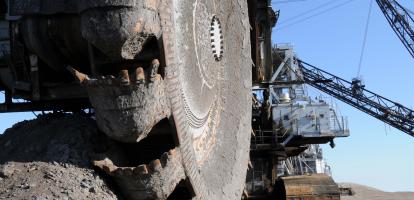 Canadian and global climate change ambitions are generally associated with a goal of reducing reliance on fossil fuels as a mechanism to reduce carbon emissions. Within this context, the Canadian oil sands have been characterized as “too expensive” to maintain production if global crude oil demand falls, a view that appears regularly in the media […]