



Deficits Do Matter: A Review of Modern Monetary Theory
 Modern Monetary Theory has Real-world Pitfalls In this paper, Farah Omran and Mark Zelmer examine Modern Monetary Theory, and find that while the MMT actually accepts that government deficits matter, and acknowledges the need to contain inflation, it overstates the degree of monetary sovereignty that governments like Canada, with a small and open economy, enjoy in […]
 Debra Steger Re-appointed as C.D. Howe Institute Senior Fellow
William Robson, CEO of the C.D. Howe Institute, announces the re-appointment of Debra Steger as a Senior Fellow. “Debra Steger is a prolific author with extraordinary experience in international trade law and…Gerard Protti Re-appointed as C.D. Howe Institute Senior Fellow
William Robson, CEO of the C.D. Howe Institute, announces the re-appointment of Gerard Protti as a Senior Fellow. “Gerry is one of Canada’s foremost authorities on the oil and gas industry and its policy…Von Finckenstein, Mitchell – A Simpler Way To Integrate Streamers Into The Broadcasting System
 From: Konrad von Finckenstein and James Mitchell To: Heritage Minister Steven Guilbeault Date: March 11, 2021 Re: A Simpler Way to Integrate Streamers into the Broadcasting System Bill C-10, An Act to Amend the Broadcasting Act, is before Parliament. Its principal aim is to bring online broadcasting (i.e., “streaming”) under the aegis of the Act. Today, online broadcasters – […]
 Jeffrey Lozon Re-appointed As C.D. Howe Institute Senior Fellow
William Robson, CEO of the C.D. Howe Institute, announces the re-appointment of Jeffrey Lozon as a Senior Fellow. “Jeff has an extraordinary range of experience in healthcare management and governance,” said…Anindya Sen Re-appointed As C.D. Howe Institute Research Fellow
William Robson, CEO of the C.D. Howe Institute, announces the re-appointment of Anindya Sen as a Research Fellow. “Anindya is a valuable contributor to the C.D. Howe Institute’s research program,” said Robson. “…Nobina Robinson Re-appointed As C.D. Howe Institute Senior Fellow
William Robson, CEO of the C.D. Howe Institute, announces the re-appointment of Nobina Robinson as a Senior Fellow. “With career accomplishments that have spanned a wide range of policy issues (higher…Mahboubi, Skuterud – An Economic Reality Check On Canadian Immigration (part II)
 From: Leagh Turner To: Canadian Employers Date: March 12, 2021 Re: The Frictionless Future for the World of Work COVID-19 has accelerated changes in almost every aspect of daily life, especially work, where a sea of change is breaking decades-old paradigms to meet the demands of a more fluid and frictionless workforce. And as organizations navigate these uncertain […]
 Governments Must Cut Red Tape to Build 5G: Telecommunications Working Group
March 9, 2021 – Ottawa must dramatically reduce the regulatory burden on the telecommunications industry to accelerate 5G deployment, says a new report from the C.D. Howe Institute.
At their recent meetings, the Telecommunications Working Group discussed the jurisdictional hurdles facing Canada’s telecommunications sector and how to best accelerate rural and remote connectivity.
Telecommunications providers face obstacles in gaining access rights to infrastructure for installing telecommunications facilities. These barriers, alongside difficulty navigating government incentive programs for expanded connectivity, could stall the federal government’s aim of extending high-speed internet coverage to 98 percent of…
Mark Zelmer on BNN – Modern Monetary Theory would mean loss of inflation control for Canada
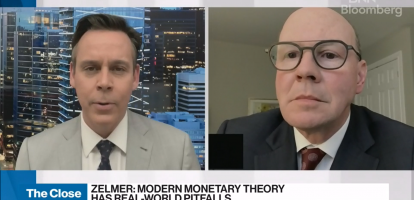
Mark Zelmer, Senior Fellow at the C.D. Howe Institute and former deputy superintendent at OSFI joins BNN Bloomberg to discuss his latest report “Modern Monetary Theory has Real-world Pitfalls.”
Un grand pas pour la finance durable et le climat – La Presse Opinion
La création probable d’un Sustainability Standards Board (SSB) mondial fera avancer la finance durable d’un grand pas, lui permettant d’exercer une pression plus efficace sur les entreprises, afin qu’elles s’engagent elles aussi dans un plan de transition vers la carboneutralité, dans leur propre intérêt et celui de la planète.
La cible nette zéro carbone d’ici 2050 est en voie d’être adoptée par le Canada et de nombreux pays, ainsi que par un nombre grandissant d’entreprises et d’investisseurs.
Le SSB aura pour mission d’établir des normes internationales régissant la divulgation par les entreprises des informations de nature ESG, c’est-à-dire portant sur leurs actions et leurs effets sur l’environnement, mais…
S3 E4: Industrial Policy for Industry 4.0
 Governments are increasingly using industrial policy to give their Industry 4.0 economies a competitive edge. How should Canada respond after past failures in guiding the invisible hand of the markets? C.D. Howe Institute VP of Research Daniel Schwanen and Fellow-in-Residence Dan Ciuriak on lessons learned, and why we can’t fear the future.