



Bishop, Dachis – Let’s Get The Private Sector Into Orphan Well Cleanup Pricing
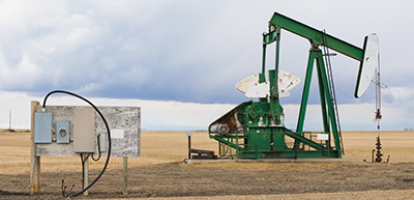 From: Grant Bishop and Ben Dachis To: Albertans concerned about orphan wells Date: February 14, 2020 Re: Let’s get the private sector into orphan well cleanup pricing There are now more than 3,400 old or spent oil and gas wells across Alberta, and the environmental risk is high and rising. So are the financial liabilities. The public cost for […]
 Regulations Alone Won’t Fix Alberta’s Potential Oil-and-gas Well Crisis – Globe And Mail Op-ed
Old or spent oil and gas wells have accrued across Alberta in the thousands. The environmental risk in the province is high and rising, and the financial liabilities are, too: Analysis by the C.D. Howe Institute in 2017 showed that the public cost could be in the billions of dollars if companies designated as “financially fragile” by the Alberta Energy Regulator (AER) simply abandoned their wells for taxpayers to clean up – an extreme scenario that is not beyond contemplation.
So amid reports about budget cuts, layoffs and alleged mismanagement on the part of the AER’s former CEO, the regulator has faced increasing pressure to change its one-size-fits-all rules, which use the valuations of operators…
Benjamin Dachis – Fixing Oil And Gas Property Tax Problems Through Regional Governance Reform
 From: Benjamin Dachis To: The Alberta Ministers of Municipal Affairs, Energy, and Treasury Board and Finance Date: January 29, 2020 Subject: Fixing oil and gas property tax problems through regional governance reform There’s a property tax revolt coming to Alberta. With oil and gas companies under financial distress, many cannot afford to pay eye-watering business […]
 Brian Livingston – International Credits For Canada Reducing Overseas Ghg Emissions
 To: Environment Minister Jonathan Wilkinson From: Brian Livingston Date: December 17, 2019 Re: International Credits for Canada Reducing Overseas GHG Emissions Canadian governments and industry are agreed that Canada should increase its offshore exports of liquefied natural gas (LNG). Part of the attraction is the possibility that Canada could lay claim to some of the reductions in greenhouse […]
 The ‘Solomon’s Choice’ That Could Render Ottawa’s Carbon-pricing Backstop Unconstitutional – Globe And Mail Op-ed
Starting Dec. 16, the Alberta Court of Appeal will hear arguments regarding the constitutionality of the federal Greenhouse Gas Pollution Pricing Act – the so-called carbon-pricing “backstop,” under which Ottawa would impose a price on greenhouse gas emissions in any province where it deemed provincial measures are not sufficiently stringent. The Alberta government’s challenge to the federal backstop is just the latest in a months-long string of appeals-court processes by governments in Ontario and Saskatchewan, where the legislation was upheld; those appeals are now headed to the Supreme Court, which will begin its hearings in March.
So the legal arguments being deployed feel, at this point, quite well-trod. However, the federal…
Has Canada reached a breaking point or turning point? – Hill Times Op-Ed
Even if it’s a good punchline for late-night comedians, there is nothing inconsistent about building pipelines while reducing greenhouse gas emissions. Stranding Canadian oil by blocking pipelines is damaging to both the energy industry and the Canadian economy as a whole. Moreover, it is an ineffective way to reduce our carbon emissions—a price on carbon is the most economically efficient policy tool we have.
By internalizing greenhouse gas externalities in economy-wide decisions, carbon pricing ensures that everyone considers their incremental impact on the global climate. It allocates emission reductions to the activities with the so-called lowest cost of abatement. If oil can be economically produced while facing a carbon…
Sylvain Charlebois – Ministerial Mandate Letter: Minister Of Agriculture And Food
 As Canada forms its next government, the Prime Minister’s Office will be preparing ministerial mandate letters. In this special Intelligence Memo series, policy experts highlight key challenges and priorities in each minister’s portfolio. From: Sylvain Charlebois To: The incoming Minister of Agriculture and Food Date: November 13, 2019 As you embark on your term as […]
 Grant Bishop – Ministerial Mandate Letter: Minister of Environment and Climate Change
 As Canada forms its next government, the Prime Minister’s Office will be preparing ministerial mandate letters. In this special Intelligence Memo series, policy experts highlight key challenges and priorities in each minister’s portfolio. From: Grant Bishop To: The incoming Minister of Environment and Climate Change Date: October 24, 2019 Canada and its partners are at a critical […]
 Grant Bishop – Ministerial Mandate Letter: Minister Of Natural Resources
 As Canada forms its next government, the Prime Minister’s Office will be preparing ministerial mandate letters. In this special Intelligence Memo series, policy experts highlight key challenges and priorities in each minister’s portfolio. To: The incoming Minister of Natural Resources From: Grant Bishop Date: October 23, 2019 Canada’s natural resources are the bedrock of national wealth and prosperity. […]
 Blake Shaffer – Using Forward Contracts To Deliver Reliable And Affordable Power
 From: Blake Shaffer To: Alberta and Ontario energy regulators Date: October 18, 2019 Subject: Using forward contracts to deliver reliable and affordable power Alberta recently cancelled the previous government’s plan for a “capacity market” for electricity that would have paid generators both for the energy they produce and their capability to do so (“steel in the ground”). Ontario has […]
 Regulating Methane Emissions Will Keep Canada’s Oil And Gas Sector Competitive, Not Hurt It – Globe And Mail Op-ed
Canadian governments are making good on a 2016 pledge to cut oil-and-gas-sector methane emissions by 40 to 45 per cent below 2012 levels by 2025.
Since the pledge, both Alberta and the federal government have issued rules on reducing leaks of methane, which is many times as potent a heat trapper as carbon dioxide, and both are slated to go into effect next year.
In recent weeks, however, the U.S. Environmental Protection Agency has proposed relaxing regulation of oil-and-gas-sector methane emissions, sparking debate about whether new tougher emissions rules will make Canada uncompetitive in attracting oil and gas investment.
Nevertheless, for our energy to retain market share globally, Canadian production…
Brian Livingston – Contracting Enbridge Mainline Could Reshape Alberta’s Oil Production
 To: Louise George, Secretary to the Canada Energy Regulator cc: Sonya Savage, Alberta Minister of Energy From: Brian Livingston Date: September 24, 2019 Re: Contracting Enbridge Mainline could reshape Alberta’s oil production The issues of curtailment, pipeline proposals and pipeline apportionment are related flashpoints in the oil patch. Curtailment has resulted in higher prices for heavy oil, but […]