



Creating a Blueprint for Green Tech in Canada Webinar

Watch the Institute’s inaugural video webinar, where Associate Director of Research, Benjamin Dachis, moderated an expert panel examining the proper policy mix needed to develop an affordable blueprint that will help Canadian governments drive their green tech goals.
For a comprehensive analysis on how governments should invest in green technologies, click here.
Coleman and Jordaan – How Canadian Liquefied Natural Gas Can Help Reduce Global Greenhouse Gas Emissions
 From: James Coleman and Sarah Jordaan To: The Hon. Catherine McKenna, Minister of Environment and Climate Change Date: August 24th, 2016 Re: How Canadian Liquefied Natural Gas Can Help Reduce Global Greenhouse Gas Emissions Your government is poised to release the findings of the first environmental assessment of a major LNG facility by October. One of […]
 Clearing the Air: How Canadian LNG Exports Could Help Meet World Greenhouse Gas Reduction Goals
 Canadian liquefied natural gas can lower global greenhouse gas emissions if it displaces dirtier sources of power abroad, according to a new C.D. Howe Institute report. In “Clearing the Air: How Canadian LNG Exports Could Help Meet World Greenhouse Gas Reduction Goals,” authors James Coleman and Sarah Jordaan show policymakers how they can make their […]
 A Blueprint for Going Green
Governments across Canada are examining policies to promote low greenhouse gas emissions technology, which will be vital to meet Canada’s pledge to reduce greenhouse gas emissions by 30 percent compared to 2005 levels by 2030.
What is the best policy mix for promoting these green technologies?
In this video we look at a three step blueprint that will lead to the efficient development of green technologies in Canada.
For the comprehensive analysis click here.
Ben Dachis – Ontario should let prices lead to energy savings, not arbitrary rules (Part I)
 From: Benjamin Dachis To: Ontario Ministry of Energy Date: August 17, 2016 Subject: Ontario should let prices lead to energy savings, not arbitrary rules Last week was a hot one in Ontario. People cranked up their air conditioning, made dinner, and turned on the TV to watch the Olympics. It meant 6 PM on August 10th was […]
 Wisest plan for Alberta’s carbon levy is investment in cutting-edge tech research: Edmonton Journal Op-Ed
It’s been on the right track so far with a price on emissions, but needs to make sure that most of its support for technology is for research and development and not wasted on subsidies to businesses and consumers for green tech they would have bought anyway.
Over the next five years, the Alberta government plans to collect nearly $10 billion in revenue from its price on greenhouse gas emissions.
More than one-third of the revenue from the carbon levy is going back to taxpayers and small businesses through tax cuts. But the majority of the money that the government is collecting — more than $6 billion over five years — is going back into the energy sector through government spending.
How should the province…
Investing in clean tech not enough, governments need optimal policy – Globe and Mail Op-Ed
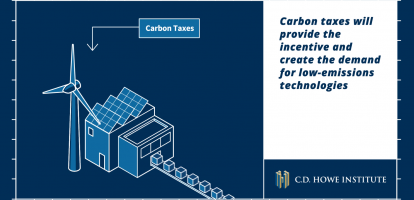
Governments across Canada are making support for green energy technology a top priority. But they should remember that simply providing subsidies to increase the supply of such tech is not enough. The optimal policy mix includes carbon pricing, to create demand for new tech, combined with government funding focused on developing distant techs not economical for private companies. Subsidizing consumers who adopt new tech is not the solution.
Ontario’s Climate Change Action Plan includes up to $375-million of research and development support for low-carbon tech, and billions more for subsidies to encourage use of low-emission tech. Alberta’s government is proposing a carbon tax, with some revenue devoted to supporting low-emission…
David Popp – The five rules for governments that want to go green
 From: David Popp To: Governments in Alberta, Ontario, and across Canada Date: July 19, 2016 Re: The five rules for governments that want to go green Governments across Canada are rolling out plans to support the deployment of low-emission technology. Ontario will begin a cap-and-trade market as of January 1, 2017, but the province’s Climate Change […]
 A Blueprint for Going Green: The Best Policy Mix for Promoting Low-Emissions Technology
 Canadian governments need an affordable blueprint to drive their green tech goals, according to a new report from the C.D. Howe Institute. In “A Blueprint for Going Green: The Best Policy Mix for Promoting Low-Emissions Technology,” author David Popp draws on international evidence to produce recommendations for the efficient development of green energy technology.
 Ontario climate plan ignores the beauty of cap-and-trade – Globe and Mail Op-Ed
The Ontario government has announced the details of its “climate-change action plan.” Under the five-year plan, up to $8.3-billion would be spent on subsidies for renewable energy and low-emissions technology support. In doing so, the government has taken a U-turn from a wise cap-and-trade policy toward costly subsidy programs.
The government was on the right track previously by relying on a cap-and-trade program to price emissions. This is a cost-efficient way of reducing emissions because it reaches the desired goal by letting market participants figure out the best way to do so.
The government plans to finance the new subsidies with revenues from an auction for permits that greenhouse-gas-emitting companies…
Donald Dewees – Don’t Rush to Electric Avenue
 From: Donald N. Dewees To: Minister Glen Murray CC: Premier Kathleen Wynne Date: June 7, 2016 Re: Don’t Rush to Electric Avenue Recent press reports suggest that the Province of Ontario is considering a plan to greatly increase the sales of electric and hybrid-electric vehicles in Ontario, with a goal of having 1.7 million of […]
 Frank McKenna – Pipelines to prosperity
 From: The Hon. Frank McKenna To: Canadians from coast-to-coast Date: May 26, 2016 Re: Pipelines to Prosperity Some 60 years ago, Minister CD Howe was tasked to link the oil and natural gas reserves of western Canada to the markets of central Canada. At the time, the proposed pipelines were politically contentious. But, in hindsight, […]