



C.D. Howe Institute Monetary Policy Council Calls for Bank of Canada to Cut Overnight Rate to 3.00 Percent Next Week and 2.75 Percent by July

December 5, 2024 – The C.D. Howe Institute’s Monetary Policy Council (MPC) calls for the Bank of Canada to lower its target for the overnight rate, its benchmark policy interest rate, to 3.50 percent at its next announcement on December 11th. The MPC further calls for the Bank to lower the target to 3.25 percent at the following announcement in January, to 3.00 percent by June of 2025, and to 2.75 percent by December of 2025.
The MPC provides an independent assessment of the monetary stance consistent with the Bank of Canada’s 2 percent inflation target. MPC co-chair Jeremy Kronick, the Institute’s Vice-President, Economic Analysis and Strategy, chaired this meeting. MPC members make recommendations for the Bank of Canada’s…
Making Housing More Affordable in Canada: The Need for More Large Cities
 Strengthening mid-sized cities like Kitchener/Waterloo, London, and Kamloops – by improving infrastructure, encouraging local business growth, forging university partnerships, and making it easier to build – can reduce in-migration into our big cities, mitigating price pressures there, and help lower costs for everyone.
 Intelligence Memos: 2024 in Review
 To: Our Faithful Readers Date: January 2, 2025 Re: Intelligence Memos: 2024 in Review Intelligence memos are a key way C.D. Howe Institute researchers share their insights about current events. And 2024 had no shortage of material: Canada’s healthcare struggles, housing affordability, the Bank of Canada’s inflation fight, a host of questionable fiscal policies from Ottawa and the […]
 The High Price of Prudence – Benchmarking Canada’s Property and Casualty Industry (Second Edition)
 Study in Brief • Canadians pay higher premiums for property and casualty insurance than citizens in many, if not most, other developed nations. This Commentary uses OECD data and private industry data to compare the national P&C insurance sector’s premiums as a percentage of Gross Domestic Product with its international peers and is an update […]
 C.D. Howe Institute Monetary Policy Council Calls for Bank of Canada to Cut Overnight Rate to 3.50 Percent Next Week, 3.00 by Summer, 2.75 Percent in a Year
December 5, 2024 – The C.D. Howe Institute’s Monetary Policy Council (MPC) calls for the Bank of Canada to lower its target for the overnight rate, its benchmark policy interest rate, to 3.50 percent at its next announcement on December 11th. The MPC further calls for the Bank to lower the target to 3.25 percent at the following announcement in January, to 3.00 percent by June of 2025, and to 2.75 percent by December of 2025.
The MPC provides an independent assessment of the monetary stance consistent with the Bank of Canada’s 2 percent inflation target. MPC co-chair Jeremy Kronick, the Institute’s Vice-President, Economic Analysis and Strategy, chaired this meeting. MPC members make recommendations for the Bank of Canada’s…
Council Recommends Keeping Stability Buffer at 3.5 Percent While Urging Major Banks to Stay Prepared
Third Meeting of the C.D. Howe Institute Domestic Stability Buffer Council
At its meeting on November 26th, the C.D. Howe Institute’s Domestic Stability Buffer Council (DSBC) recommended that the Office of the Superintendent of Financial Institutions (OSFI) maintain the Domestic Stability Buffer (DSB) for the domestic systemically important banks (D-SIBs)1 at 3.5 percent at its next setting in December. The DSBC also emphasized the importance of D-SIBs preserving their strong capital positions.
The DSBC provides OSFI, industry participants, and key economic policy voices with an independent assessment of the appropriate size of the buffer in pursuit of OSFI’s mandate of contributing to public confidence in Canada’s…
Graph of the Week: Deposit Preferences Shift as Interest Rates Fluctuate
 Term deposits (think GICs) used to be a larger share of total deposits than demand deposits (think chequing accounts). When interest rates hit rock bottom in the Great Financial Crisis, their popularities swapped places. As interest rates started increasing in mid-2022, the gap favouring demand deposits began to narrow, a good thing for an industry […]
 Mark Zelmer – Change is Afoot. Prudential Regulation Must Change
 From: Mark ZelmerTo: Financial sector policy makers and prudential regulatorsDate: October 31, 2024Re: Change is Afoot. Prudential Regulation Must Change Canada has not had a bank failure in over 30 years. But banking is changing, and so prudential regulation of deposit-taking institutions may need to change, too. Bank runs can now cripple an institution in […]
 A New Monetary Policy Tool: The Real Neutral Rate Yield Curve for Canada
 With the Bank of Canada engaging in both conventional and unconventional monetary policy, the difference between the Bank of Canada’s policy rate and the neutral rate when the economy is at potential and inflation is on target is no longer sufficient in determining whether – and to what degree – monetary policy is stimulative or […]
 Barry Gros – Ontario’s New Target Benefit Plan Framework: One Caveat
 To: Ontario Pension Observers From: Barry Gros Date: October 23, 2024 Re: Ontario’s New Target Benefit Plan Framework: One Caveat Last week, Ontario’s Ministry of Finance announced the finalization of regulations concerning its target benefit pension plan framework, to be implemented on January 1. The target benefit pension (TBP) plan framework is a welcome clarification of the rules […]
 Jeremy Kronick and Steve Ambler – The Bank of Canada must loosen monetary policy at a faster pace
Published in the Globe and Mail.
The inflation beast is looking considerably weaker. Between the Bank of Canada’s rate announcement on Sept. 4 and its announcement on Wednesday, Statistics Canada released two of its monthly reports on the consumer price index. They showed that headline inflation fell by almost a full percentage point and is now well below target.
For this reason, markets were not surprised by the 50-basis point cut in the Bank of Canada’s overnight rate target. The cut was fully baked into market expectations, and there was even speculation about a supersized cut of 75 basis points.
As it is, the bank has more work to do with its overnight rate. With inflation falling faster than the policy rate,…
Jeremy M. Kronick on BNN Bloomberg – How a 2% interest rate could impact mortgage rates
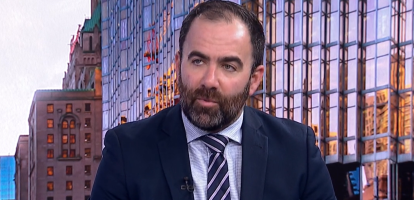
As Canada stays on track for a 2 percent inflation rate, what could this mean for mortgage rates? Jeremy M. Kronick, Vice-President, Economic Analysis and Strategy at the C.D. Howe Institute, explains.