



A Plan to Secure Alberta’s Fiscal Future
 The Alberta government introduced its latest budget the very same day as Russia launched its invasion of Ukraine. Oil prices spiked immediately afterwards, bringing an unplanned fiscal windfall to Alberta taxpayers. Managing this responsibly for the long-term benefit of Albertans will be critical. If current oil markets forecasts hold the three-year windfall to the province […]
 High Stakes Ahead: Canada and the Global Minimum Tax for Multinationals
 The 2022 federal budget launched consultations on the implementation of new proposed rules for a Global Minimum Tax of 15 percent, which was endorsed in principle by members of the OECD and G20 in 2021.In simple terms, the tax rules would apply to multinational enterprises (MNEs) with annual consolidated revenues generally of EUR 750 million. […]
 William B.P. Robson on BNN – Canada’s productivity ‘terrible’ compared to other countries
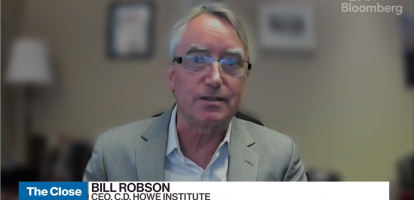
Bill Robson, CEO of C.D. Howe Institute, joins BNN Bloomberg for reaction to former finance minister, Bill Morneau sounding the alarm on Canada’s economic future. He agrees the current federal Liberal government is not thinking about long-term growth and that Canada is behind on infrastructure development, productivity, and even intangible investments.
Steve Ambler – Quantitative Easing – Unintended Consequences
 From: Steve Ambler To: Bank of Canada Governing Council Date: May 25, 2022 Re: Quantitative Easing – Unintended Consequences Rising and persistent inflation in Canada has been blamed on massive money printing by the Bank of Canada. This is far too simplistic. It is only when the Bank of Canada’s purchases of government bonds, which create base money […]
 Ken Boessenkool on The Agenda – Can Campaign Politics Meet Economic Realties?
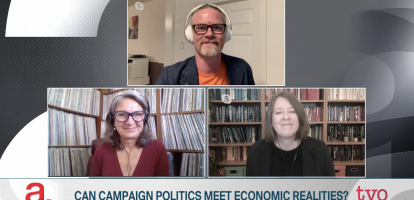
How do the economic plans Ontario’s political parties have in place stack up against what Ontarians are really experiencing, especially as they emerge from two years of affordability issues caused by the pandemic. The Agenda asks: Ken Boessenkool, Research Fellow at C.D. Howe Institute and Senior Fellow at Smart Prosperity; Allison Christians, Professor, H. Heward Stikeman Chair in Tax Law, McGill University; and Armine Yalnizyan, Economist, Atkinson Fellow On The Future Of Workers.
Robson, Laurin – Ottawa’s Spending Addiction: $2 Billion More Each Month
 From: William B.P. Robson and Alexandre Laurin To: Canadian Debt Watchers Date: April 29, 2022 Re: Ottawa’s Spending Addiction: $2 Billion More Each Month “Build back better!” We have heard that a lot since COVID hit – mainly from advocates for government spending, who saw pandemic-related fiscal stimulus, financed by central bank bond purchases, as suddenly making things […]
 Paul Jenkins – Interest Rates… Back to the Future
 From: Paul Jenkins To: Borrowers, Savers, and Policymakers Date: April 28, 2022 Subject: Interest Rates… Back to the Future Interest rates, particularly rising interest rates, are on everyone’s mind these days. The focus is primarily alarm about rising inflation and the actions – actual or anticipated – by major central banks to bring inflation under […]
 John Lester – Broadening the New Review of Tax Support for R&D
 From: John Lester To: Canadians Concerned About Innovation Date: April 26, 2022 Re: Broadening the New Review of Tax Support for R&D Canadians concerned about our lacklustre innovation performance were cheered by the budget announcement that the Scientific Research and Experimental Development (SR&ED) program would be reviewed. Canada’s business research and development performance is dismal, […]
 John Lester – Who Will Pay for the Pandemic-Induced Debt?
 From: John Lester To: Canadians Hoping for a Fiscally Responsible Federal Government Date: April 21, 2022 Re: Who Will Pay for the Pandemic-Induced Debt? “We are absolutely determined that our debt-to-GDP ratio must continue to decline,” said Finance Minister Chrystia Freeland in her budget speech this month. “Our deficits must continue to be reduced. The […]
 Don Drummond – The 2022 Federal Budget Measures Misaligned with Needs
 From: Don Drummond To: Finance Minister Chrystia Freeland Date: April 20, 2022 Re: The 2022 Federal Budget Measures Misaligned with Needs A common reaction to the 2022 federal budget is “not as bad as expected.” What kind of evaluation is this? Faint praise simply because fears of massive new spending did not materialize? But that fear was stoked by […]
 The Bank of Canada’s rate hike: You can’t fight inflation on the QT – Financial Post Op-Ed
With inflation on the rise, the Bank of Canada kicked its tightening cycle into high gear Wednesday by announcing a 50-basis-point increase in its target for the overnight rate — the first non-25-basis-point hike in over 20 years. It also modified its stance concerning its over-sized holdings of Government of Canada bonds, which swelled its balance sheet during so-called Quantitative Easing (QE). Those days are over: it will now initiate Quantitative Tightening, or QT, by not replacing bonds on its balance sheet as they mature, thus reducing its bond holdings over time.
Some might be disappointed the bank didn’t go further on QT by announcing it would actually start selling its holdings of government bonds. Not to worry.…
Edward Iacobucci – The Competition Bureau’s Approach to the Goals of Competition Policy
 To: Competition Law Observers From: Edward Iacobucci Date: April 19, 2022 Re: The Competition Bureau’s Approach to the Goals of Competition Policy What should be the goals of competition policy? Section 1.1 of the Competition Act provides that promoting competition promotes efficiency, competitive prices and product choices, and tends to ensure that small and medium-sized enterprises (SMEs) have […]