



Bill Robson on BNN – RRSP age limit needs to be raised amid COVID-19 crisis

Bill Robson, president and CEO of the C.D. Howe Institute, explains why he thinks the government of Canada should be allowing Canadians to contribute to their RRSPs past 71 and eliminate the drawdowns in RRIFs as markets continue to plunge due to the COVID-19 outbreak.
Alberto Alesina – Explaining Austerity
 From: Alberto Alesina To: Canadians concerned about government budget deficits Date: March 12, 2020 Subject: Explaining austerity For more in-depth discussion on this topic, listen to the C.D. Howe Institute podcast interview of Harvard’s Alberto Alesina hosted by Michael Hainsworth, which is summarized here. Austerity very simply is a policy or a combination of policies needed to reduce […]
Bill Robson on BNN – COVID-19 and Fiscal Aid
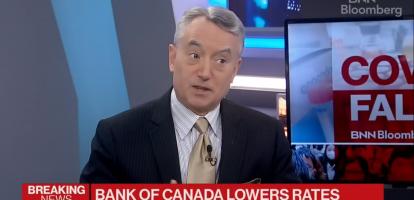
Bill Robson, President and CEO at the C.D. Howe Institute, breaks down the Bank of Canada’s rate cut and Finance Minister Bill Morneau’s support funding markets for businesses. Robson says that the government should be focusing on delivering the aid upfront rather than spreading it overtime, to try and help companies as soon as possible without prolonging the complications.
S2 E4 – Shadow Budget 2020
 Ottawa is preparing its 2020 Federal Budget, and the Institute is urging Parliament Hill to cut the corporate tax rate and address the impact of COVID-19 on the Canadian Economy. CEO Bill Robson tells host Michael Hainsworth, further measures may be required. Read the full report
Supporting Growth, Restoring Confidence: A Shadow Federal Budget for 2020
 The Study In Brief Early 2020 presents Canada with two challenges: amenic economic growth, and nervousness about the federal government’s fiscal stewardship. The C.D. Howe Institute’s Shadow Federal Budget for 2020 addresses both. It contains a number of measures to improve the rewards from work, saving and investment – initiatives that will support near-term spending […]
Jon Johnson – Combatting Climate Change With Carbon Border Taxes: Good Or Bad Idea?
 From: Jon Johnson To: Canadians Concerned About Climate Change Date: March 5, 2020 Re: Combatting Climate Change with Carbon Border Taxes – Good or Bad Idea? European Commission president Ursula von der Leyen proposes a “carbon border tax” to “avoid carbon leakage.” Bernie Sanders advocates a “carbon intensity fee” (i.e., a carbon border tax) on […]
Edward Glaeser – Solving The Housing Price Crisis, Part II
 From: Edward Glaeser To: Canadians concerned about housing prices Date: March 4, 2020 Re: Solving the Housing Price Crisis, Part II The regulations and structures around housing markets are essentially rigged against the millennial generation trying to break in to the market. They protect existing homeowners against both the nuisance of new construction, any potential negative side effects of […]
There is No Try: Sustainable Healthcare Requires Reining in Spending Overshoots
 Study In Brief The Canadian Institute for Health Information’s annual National Health Expenditure (NHEX) is a vital source of data on how much Canadians and their governments are spending on healthcare generally, as well as on specific categories. Because the NHEX reports give both preliminary numbers based on government projections and revised numbers for past […]
There should not be a U-turn on Alberta’s fiscal journey – Calgary Herald Op-Ed
Alberta’s government will table its 2020-21 budget on Feb. 27. Its previous budget in October mapped out the government’s fiscal path to return to budget balance by 2022-23, including annual spending targets by program area. The government’s freeze on topline program spending translates into real per capita reductions in spending, particularly in health and education.
These targets are necessary to bring Alberta’s program spending in-line with nationwide benchmarks and to return Alberta to a sustainable fiscal path. However, while the government laid out its long-term plan in October, this budget must clearly specify measures for restructuring spending.
The challenge will be to implement spending reductions in the face of…
Benjamin Dachis on BNN – Alberta budget 2020
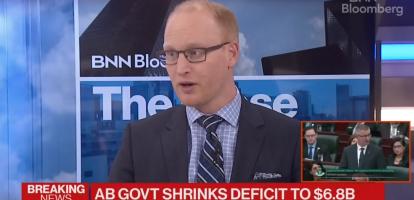
Benjamin Dachis, Director of Public Affairs at C.D. Howe Institute, joins BNN Bloomberg for instant reaction to the Alberta budget release.
S2 E3 – Austerity and the Economy
 When does it make sense to cut spending to reduce government debt? The answer from Harvard’s Alberto Alesina may surprise you, and he tells host Michael Hainsworth it has everything to do with investor confidence.
Allan Lanthier – Ottawa Should Forget About Limiting Interest Expense Deductibility
 From: Allan Lanthier To: The Department of Finance Date: February 19, 2020 Re: Ottawa should forget about limiting interest expense deductibility The Liberals promised in the fall campaign to limit a corporation’s deductible interest expense to 30 percent of earnings before interest, taxes, depreciation and amortization (EBITDA) if annual interest expense exceeds $250,000. It would […]