



Mark Zelmer – Beware The Seduction Of Modern Monetary Theory
 From: Mark Zelmer To: Policymakers in Ottawa Date: April 12, 2021 Re: Beware the Seduction of Modern Monetary Theory The massive increase in government spending in Canada and around the world in response to COVID-19 has been accompanied by the siren song of Modern Monetary Theory, the fashionable economic thesis that predates the pandemic. We need to turn a […]
 Beware the siren song of Modern Monetary Theory – Financial Post Op-Ed
The massive increase in government spending in Canada and around the world in response to the COVID-19 pandemic has been accompanied by a siren song in the form of a new economic theory: “Modern Monetary Theory,” or MMT for short. But as we begin to emerge from the acute phase of the pandemic we need to turn a deaf ear to that song. Now that inflation concerns are beginning to stir it is hard to imagine governments raising taxes or cutting spending anytime soon to keep inflation in check — yet that’s how MMT advocates would control inflation, with what traditionally have been regarded as fiscal policies rather than the customary monetary tools of interest rates and liquidity measures.
As I point out with my co-author,…
Ambler, Kronick, Robson – A Welcome Retreat By The Bank Of Canada
 From: Steve Ambler, Jeremy M. Kronick, and William B.P. Robson To: Bank of Canada Watchers Date: April 6, 2021 Re: A Welcome Retreat by the Bank of Canada On March 23, the Bank of Canada announced the upcoming suspension of some of its major asset-purchase programs. This is good news. Financial stresses at the beginning of the […]
 S3 E7: Modern Monetary Theory with Farah Omran and Mark Zelmer
 Times of crisis open the door to new economic theories. As governments inflate debt to address them, talk about Modern Monetary Theory has grown into a chorus in some circles – particularly as the Americans discuss the “Green New Deal.” But as report authors Farah Omran and Mark Zelmer tell host Michael Hainsworth, Modern Monetary […]
 Don’t be alarmed as the Bank of Canada begins its COVID withdrawal – Financial Post Op-Ed
On March 23, the Bank of Canada announced the upcoming suspension of some of its major asset-purchase programs. This is good news. Financial stresses at the beginning of the pandemic a year ago led the bank to buy the debt of provincial governments and private companies. Those stresses are now in the past and Canadians should welcome the bank’s retreat from a role fraught with economic and political risks.
The programs covered by the announcement include the Commercial Paper Purchase Program, the Provincial Bond Purchase Program, and the Corporate Bond Purchase Program. The Bank established these programs when liquidity in the markets for these securities dried up a year ago. The programs were very successful:…
Le Bonhomme Sept Heures Effraie Les Marchés – La Presse Opinion
On le croyait mort, mais certains l’ont vu rôder. Plusieurs prédisent son retour prochain. D’autres en font plutôt des gorges chaudes. L’inflation est redevenue le bonhomme Sept Heures des marchés financiers.
Ce n’est pas tant l’augmentation du coût de la vie qui préoccupe les financiers, par ailleurs bien payés, mais l’effet négatif qu’elle pourrait avoir sur les taux d’intérêt et par-delà, sur leurs investissements. L’inflation soulève aussi un questionnement sur le financement de la dette publique.
Ces derniers temps, l’afflux des bonnes nouvelles énerve les marchés. Aux États-Unis, ils notent l’accélération de la vaccination, le gigantesque stimulus budgétaire et un taux d’épargne très élevé. Cet été, les…
The Bank of Canada needs to manage inflation expectations – Financial Post Op-Ed
The Bank of Canada stuck to the status quo last week, leaving its target for the overnight interest rate at 25 basis points and maintaining quantitative easing (QE) at a rate of at least $4 billion of bond purchases per week. But it did so in the context of higher inflation and a stronger-than-expected economy. With good news on the vaccination front and the prospect of more economic activity in the near term, there is reasonable concern the recent rise in inflation is more than just a one-off rebound from depressed prices a year ago. The Bank’s challenge now is to manage, not just inflation, but inflation expectations, as well.
Year-over-year headline inflation increased from 0.7 per cent in December to 1.0 per cent in January,…
The Impact of Monetary Policy on Financial Stability
 Easy Money Unlikely to Cause Financial Instability in Canada On the heels of the Bank of Canada reiterating they will keep interest rates low, authors Jeremy Kronick and Steve Ambler explore the effect monetary policy has on financial stability and consider whether Canadians should be worried about the impact of low interest rates. To study […]
 Paul Jenkins – Time Inconsistency And Inflation Expectations
 From: Paul Jenkins To: Canada’s Monetary Policy Community Date: March 15, 2021 Re: Time Inconsistency and Inflation Expectations Many analysts and pundits have been pointing to well-anchored inflation expectations as an important reason why inflation risks remain low in Canada and elsewhere, notwithstanding the very accommodative stance of monetary policies, strongly expansionary fiscal policies, and […]
 Is Inflation Back? It’s Not An Economic Question, It’s Political – Globe And Mail Op-ed
Suddenly, inflation is in the news. In Canada and abroad, spending is surging and COVID-impaired production is struggling to keep up. Key commodities – oil, lumber and metals – are expensive.
It is front-of-mind in financial markets as well. The yield on the federal government’s 30-year bonds, which was below 0.9 per cent last August, topped 2.0 per cent last week – well above its pre-pandemic level.
Do these headlines and fears represent overreactions to rogue statistics and possible minor tactical shifts by central banks? Or is something more fundamental happening? Will politicians who won’t stop spending more than they tax end up forcing central banks to print money to cover the difference?
Current indicators and…
Deficits Do Matter: A Review of Modern Monetary Theory
 Modern Monetary Theory has Real-world Pitfalls In this paper, Farah Omran and Mark Zelmer examine Modern Monetary Theory, and find that while the MMT actually accepts that government deficits matter, and acknowledges the need to contain inflation, it overstates the degree of monetary sovereignty that governments like Canada, with a small and open economy, enjoy in […]
 Mark Zelmer on BNN – Modern Monetary Theory would mean loss of inflation control for Canada
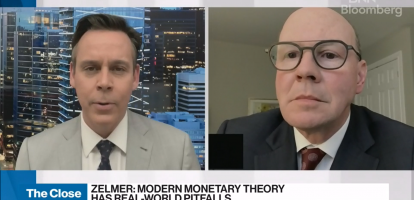
Mark Zelmer, Senior Fellow at the C.D. Howe Institute and former deputy superintendent at OSFI joins BNN Bloomberg to discuss his latest report “Modern Monetary Theory has Real-world Pitfalls.”