



Michael Smart – Ensuring The Independence Of The Bank Of Canada Remains Intact
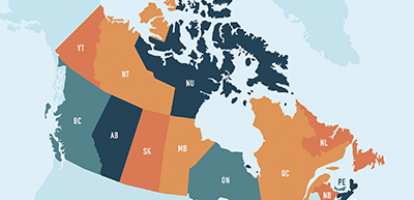 From: Michael Smart To: Bank of Canada Governing Council Date: April 30, 2020 Re: Ensuring the independence of the Bank of Canada remains intact With its recent decision to extend quantitative easing policies to provincial debt, the Bank of Canada is setting off into uncharted waters. In recent weeks, the Bank has announced new large-scale […]
 Kyle Hanniman – Backstopping Provincial Debt: How The Bank Of Canada Made Its Move
 From: Kyle Hanniman To: Monetary Policy Watchers Date: April 28, 2020 Re: Backstopping provincial debt: How the Bank of Canada made its move On April 15, the Bank of Canada announced plans to extend its new quantitative easing program to provincial debt. The new Provincial Bond Purchase Program (PBPP) will buy up to $50 billion […]
 Mark Zelmer – Facilitating An Exit Strategy For Bank Of Canada Market Interventions
 From: Mark Zelmer To: Governing Council and Minister Morneau Date: April 27, 2020 Re: Facilitating an Exit Strategy for Bank of Canada Market Interventions The Bank of Canada balance sheet has ballooned by more than $200 billion over the past six weeks. This has been accompanied by an unprecedented expansion in the range of assets […]
 Expanded Bank of Canada Balance Sheet Requires Balancing Act: Crisis Working Group on Monetary and Financial Measures
April 23, 2020 – Between early March and mid-April, the Bank of Canada’s balance sheet more than doubled, dwarfing anything seen in 2008. Moreover unlike 2008, this increase has serious implications for future inflation, because the Bank’s increased liabilities are not the result of government deposits, but rather increased “settlement balances” or deposits by financial institutions, which increases the monetary base.
Once the pandemic and economic crisis passes there is no easy solution to the potential inflation problem arising from more money chasing fewer goods and services. Trying to unwind the Bank’s balance sheet by selling longer-term assets is fraught with political risk. Alternatively, while a floor system could help…
Bank of Canada’s unprecedented actions mean there may be inflation ahead – Financial Post Op-Ed
The Bank of Canada’s rate announcement last week — no change — was no surprise. But the effects of its asset purchases could be. The Bank had already lowered the target rate to its effective lower bound of 0.25 per cent, so a further cut was not expected. The Bank didn’t say so but the rate may stay where it is for a while.
The Bank did discuss expansions to quantitative easing (QE), however. How QE will play out for monetary policy, and especially the inflation target, is cause for concern. In its Monetary Policy Report and subsequent press conference, the Bank emphasized that its actions to date have been oriented towards supporting the smooth functioning of financial and credit markets. A focus on financial stability at a time…
Baker, Bloom, Davis, Terry – Covid-induced Economic Uncertainty
 From: Scott Baker, Nick Bloom, Steven J. Davis and Stephen J. Terry To: Canadians concerned about COVID-19’s economic impact Date: April 22, 2020 Re: COVID-Induced Economic Uncertainty Major uncertainties surround almost every aspect of the COVID-19 pandemic from the virus itself to the human toll to the economic recovery. The tremendous speed of the shock makes assessing the macro-economic […]
 Paul Jenkins – In Praise Of Imprecision
 From: Paul Jenkins To: Monetary Policy Watchers Date: April 22, 2020 Re: In Praise of Imprecision For the first time since 9/11, the Bank of Canada, with the release of its latest monetary policy report last week, opted not to present a base-case projection for the Canadian economy. The omission was noteworthy, but appropriate, as […]
 How to help the provinces weather the COVID-19 economic shock – Financial Post Op-Ed
Since the COVID-19 crisis began, yield spreads for provincial 10-year bonds over equivalent federal debt have increased by about 100 basis points across all provinces. Some provinces — Newfoundland, for example — are in even worse shape. To ease funding pressures on the governments that are on the front line in health care and social assistance we need a two-pronged approach in which the Bank of Canada addresses disruption in the debt markets, and an overhauled federal fiscal backstop helps provinces still in need.
The Bank of Canada is already providing liquidity to the provinces by purchasing short-term provincial debt, thus helping alleviate rollover concerns. It has also embarked on a large-scale asset purchase program —…
Ambler, Kronick – Why Canadian Quantitative Easing Needs Transparency
 To: Monetary Policy Watchers From: Steve Ambler and Jeremy M. Kronick Date: April 15, 2020 Re: Why Canadian Quantitative Easing Needs Transparency For the first time in its history, with the overnight rate hitting its effective lower bound of 0.25 percent, the Bank of Canada has embarked on the path of quantitative easing (QE). This […]
 Bank of Canada Should Keep Overnight Rate at 0.25 Percent, Support Financial Market Stability through COVID-19 Crisis: C.D. Howe Institute Monetary Policy Council
April 9, 2020 – The C.D. Howe Institute’s Monetary Policy Council (MPC) recommends that the Bank of Canada maintain its target for the overnight rate, its benchmark policy interest rate, at 0.25 percent for at least a year.
The MPC provides an independent assessment of the monetary stance consistent with the Bank of Canada’s 2 percent inflation target. William Robson, the Institute’s President and CEO, chairs the Council. Council members make recommendations for the Bank of Canada’s upcoming interest-rate announcement, the subsequent announcement, and the announcements six months and one year ahead.
Although the votes for individual members varied somewhat (see table), reflecting the unusual crisis-…
Jenkins, Kronick – Covid-19: A Macroeconomic Narrative
 From: Paul Jenkins and Jeremy M. Kronick To: Canadians Looking to Understand the Times Date: April 2, 2020 Subject: COVID-19: A Macroeconomic Narrative These are highly uncertain times, as we individually and collectively face the challenges of COVID-19. With the many complexities – both health and economic related – is there a simple narrative that […]
 Time of the Essence for CEBA: Crisis Working Group on Monetary and Financial Measures
April 1, 2020 – The C.D. Howe Institute’s Monetary and Financial Measures Working Group, supported by a group of financial market experts, and co-chaired by former Governor of the Bank of Canada David Dodge and former Deputy Superintendent of OSFI Mark Zelmer, held its second meeting on Monday, March 30, 2020.
The working group agreed that, while there is a need for governments and central banks to monitor the effect of current crisis measures on debt and potential future inflation, these concerns are not a short-run issue and should not come at the expense of the immediate need for large-scale fiscal stimulus. To that end, the Monetary and Financial Measures Working Group recommends the following:
Quickly…