



Don Drummond – Let’s Hope for Solid Hit from the PBO’s Third Swing at Carbon Tax Analysis
 From: Don DrummondTo: Carbon tax watchersDate: September 18, 2024Re: Let’s Hope for Solid Hit from the PBO’s Third Swing at Carbon Tax Analysis The “corrected” analysis by the Parliamentary Budget Office of the carbon tax and rebates is due soon. One hopes it will get more things right in this third crack at evaluating the […]
 Jon Johnson – TC Energy Loses its Keystone XL Claim Against US
 From: Jon Johnson To: Keystone Saga Watchers Date: September 12, 2024 Re: TC Energy Loses its Keystone XL Claim Against US The Keystone pipeline saga ended for TC Energy over the summer, when a World Bank tribunal issued its award finding for the US. The US had initiated a jurisdictional challenge in this proceeding based […]
 Kronick, Ambler – Don’t Fear Fed Inaction; Keep Those Rate Cuts Coming
 To: Interest rate watchersFrom: Jeremy M. Kronick and Steve AmblerDate: September 10, 2024Re: Don’t Fear Fed Inaction; Keep Those Rate Cuts Coming With CPI inflation slowing to 2.5 percent in July, last week’s Bank of Canada rate cut surprised no one.Given the dovish tone of the Bank’s announcement, it would be reasonable to expect at […]
 Glen Hodgson – The US Election, Campaign Promises and the Canadian Economy
 From: Glen HodgsonTo: US election watchersDate: September 9, 2024Re: The U.S. Election, Campaign Promises and the Canadian Economy Canada has a huge stake in the outcome of the coming US election. Would a Trump or Harris administration have a larger impact on the Canadian economy and pose a greater threat to Canadian economic interests? […]
 Daniel Schwanen – New Thinking Needed on Labour Rules at Supply Chain Choke Points
 To: Labour Minister Steven MacKinnon and Transport Minister Pablo Rodriguez From: Daniel Schwanen Date: September 6, 2024 Re: New Thinking Needed on Labour Rules at Supply Chain Choke Points Millions of Canadians and hundreds of thousands of businesses were relieved when the Canada Industrial Relations Board (CIRB) ordered Canadian National and Canadian Pacific Kansas City to resume services, and […]
 Lawrence Herman – Navigating Canada’s Tough New Trade Stance with China
 To: Canadians concerned about tradeFrom: Lawrence HermanDate: September 5, 2024Re: Navigating Canada’s Tough New Trade Stance with China The Trudeau government’s 100-percent tariff surcharges on Chinese electric vehicles march in step with the United States, Mexico and the European Union. As well as hitting EVs, Canada will be applying 25-percent import surcharges on Chinese aluminum […]
 Minding the Purse Strings: Major Reforms Needed to the Federal Government’s Expenditure Management System
 The federal government’s expenditure management system (EMS) has many desirable characteristics but needs substantial reform to achieve its objectives of ensuring that programs are effective, efficiently delivered, aligned with government priorities, and represent value for money. Evaluation of government transfer payments is the cornerstone of the EMS, but its impact is diminished by: Excluding measures […]
 Graph of the Week: Share of Public Sector Employees in Total Employment and Public Sector Productivity
 Graph of the Week is a new series from the C.D. Howe Institute’s Graphic Intelligence that presents valuable and easily digestible data. Each Monday we unveil one new captivating chart or graph with interesting insights, explaining it in two-to-three sentences. Dive into the data with us.Post-pandemic, the share of public sector employees in total employment […]
 The Municipal Money Mystery: Fiscal Accountability in Canada’s Cities, 2023
 by William B.P. Robson and Nicholas Dahir The budgets municipal governments present around the beginning of their fiscal years, and the audited financial statements they publish after year-end, are crucial for decision-making and accountability. A review of the budgets and audited financial statements of 32 major Canadian municipalities reveals a troublingly mixed picture. The fiscal […]
 Ontario’s 2024 Budget Gets a B with Bill Robson
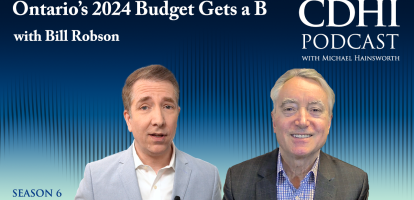
Populist budgets don’t get A+ grades. But why? And what’s wrong with the budget Ontario’s Conservative government recently tabled? The C.D. Howe Institute’s Bill Robson tells Michael Hainsworth that it’s about more than just deficit spending.
Peter Weltman – What Our Winter Tires and Infrastructure Have in Common
From: Peter Weltman To: Infrastructure observers Date: April 2, 2024 Re: What Our Winter Tires and Infrastructure Have in Common I just booked my appointment to have my winter tires swapped with summer tires. Toronto had little snow this year and whatever arrived melted within a few days, so I feel like I didn’t get my money’s worth from […]Ontario Budget 2024 – The Agenda with Steve Paikin
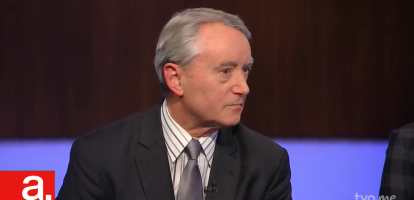
The Ontario government released its plans for spending for the next year yesterday. But are they priorities sound? C.D. Howe Institute CEO Bill Robson joined the show to discuss.