



The Bank of Canada will hold rate at 5% tomorrow: C.D. Howe’s Jeremy Kronick
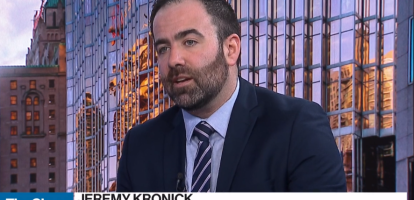 Jeremy Kronick, Associate Vice President, Director of the Centre on Financial and Monetary Policy, joined BNN Bloomberg to look ahead to the Bank of Canada’s rate decision tomorrow.
 The Scope and Nature of Private Healthcare in Canada
 The intense debate pitting private versus public healthcare in Canada needs a reality check. Private aspects of healthcare exist in different forms and to varying degrees across Canadian provinces, largely depending on their respective legislation and regulations. For healthcare professionals providing insured services, most bill through the public system, but not all. The current […]
 C.D. Howe Institute Monetary Policy Council Calls for Bank of Canada to Hold Overnight Rate at 5.00 Percent through March, Cut to 3.75 Percent by January of 2025
January 18, 2024 – The C.D. Howe Institute’s Monetary Policy Council (MPC) recommends that the Bank of Canada maintain its target for the overnight rate, its benchmark policy interest rate, at 5.00 percent at its next announcement on January 24th. The MPC further recommends that the Bank keep the target at 5.00 percent in March, before reducing it to 4.50 percent by July and to 3.75 percent by January of 2025.
The MPC provides an independent assessment of the monetary stance consistent with the Bank of Canada’s 2 percent inflation target. William Robson, the Institute’s CEO, chairs the Council. Council members make recommendations for the Bank of Canada’s upcoming interest-rate announcement, the subsequent…
Understanding the scope of private healthcare in Canada
Can we really debate private healthcare in Canada if we don’t understand how it works? A new report by the C.D. Howe Institute explains how to understand private healthcare in context, reveals why the contours of private healthcare in…Michael J. Trebilcock – Cracking Canada’s Policy Silos
 From: Michael J. Trebilcock To: Canadians concerned about public policy Date: January 18, 2024 Re: Cracking Canada’s Policy Silos Many of Canada’s most pressing policy challenges entail significant interaction effects between policy domains, which for a federation like Canada poses major coordination hurdles. These arise both vertically between levels of government and horizontally within levels of government that are […]
 Carbon pricing needs a makeover – Globe and Mail
Support for Canada’s federal carbon tax for the control of greenhouse gas emissions appears to be crumbling after Ottawa’s decision in the fall to exempt home heating oil from the tax until 2027. Polling by the Angus Reid Institute indicates that two-thirds of Canadians support a further exemption for all home heating fuels, including natural gas, and many (42 per cent) want the carbon tax abolished altogether.
Yet exempting natural gas from the carbon tax, or eliminating the tax altogether, would actually harm most of the households who support the idea. That is because the proceeds from the tax are pooled and then rebated to households in the jurisdiction in which they are collected (the federal carbon tax applies…
Hodgson, Smallridge – Unlocking Indigenous Financing: Are Loan Guarantees the Answer?
 From: Glen Hodgson and Diana Smallridge To: Reconciliation observers Date: January 17, 2024 Re: Unlocking Indigenous financing: are loan guarantees the answer? The federal government’s recent Fall Economic Statement included a commitment to establish a loan guarantee program to foster Indigenous equity ownership in major natural resource sector projects. This offers clear recognition that significant amounts of Indigenous financing […]
 The Regent Debate Revisited with Mitzie Hunter, Jason Kenney and John Tory
 Can Canada’s fraying social safety net catch new immigrants? And if not, what’s the solution as headlines reveal many are sleeping in shifts, dying on the streets, and not able to leverage their skillset in their new homeland? Former Ontario MPP Mitzie Hunter, Alberta Premier Jason Kenney and Toronto Mayor John Tory join Michael Hainsworth to revisit an […]
 Gripped by Toronto’s annual budget panic? Just wait for the surplus – Globe and Mail
The annual panic over the City of Toronto budget is peaking. The 2024 version stands out in a bad way, with a double-digit tax increase proposed for homeowners and many businesses. Yet much of the ritual is familiar. For one thing, it is late: The city is already collecting and spending money council has not approved. Worse, the dire numbers from city staff last week are long on alarm and short on useful information.
Suppose you are preparing a year-ahead budget for your family, or a business or non-profit. You start with recent experience. Your last complete year is key, because you have actual revenue and expenses for that year, and know the difference between them – your surplus or deficit. The current year isn’t yet over –…
Paul R. Masson – Goldilocks Interest Rates Needed to Help Housing Affordability
 From: Paul R. Masson To: Canadian housing watchers Date: January 15, 2024 Re: Goldilocks interest rates needed to help housing affordability In the current debate about how to make housing affordable in Canada, there is a curious omission: The role of monetary policy, which was excessively loose in creating the problem and can be more responsibly applied to solve it. […]
 Peter Hall – Near-shoring and SMEs: Benefits and costs
From: Peter Hall To: International trade watchers Date: January 12, 2024 Re: Near-shoring and SMEs: Benefits and costs Business investment is being rocked by a new movement. Proof is pouring in that near-shoring is taking the world by storm. That is, as far as we can tell at this point. This wave is so new that it’s going to […]Overly optimistic Liberals are lowballing government debt risk – Financial Post
In its November Fall Economic Statement, the federal government presented a long-term projection that shows its debt ratio — that is, federal debt divided by GDP — declining smoothly over the next 30 years. But this outcome follows from overly optimistic assumptions about interest rates and program spending, and a decision to ignore the impact of recessions, which are certain to happen in any 30-year period. Taking such a rosy approach to debt sustainability allows the government to avoid making the hard choices on spending and taxes that no government likes.
Ottawa’s analysis assumes the effective interest rate on federal debt remains below the growth rate of the economy from now all the way to 2055-56. This sunny…