



Benjamin Dachis – The Mandated Access Dance Faced By The Crtc
 From: Benjamin Dachis To: Canadian Telecommunication Watchers Date: March 26, 2021 Re: The Mandated Access Dance Faced by the CRTC Policy decisions coming soon from the CRTC, the federal telecommunications regulator, are going to shape major investment decisions with critical impacts on our economy. Failure to get the right balance between investment and sustainable competition will jeopardize efforts […]
 Borrowing Covering Over Half of Federal Programs Cost
 The federal government’s deficit this fiscal year is so big that borrowing is covering more than half its programs. The tax cost of a program dollar is less than 50 cents. No wonder people are talking about new federal spending on everything from drugs to daycare to universal incomes. Everything looks better at half price! […]
 Canada risks becoming house-rich and everything else-poor – Financial Post Op-Ed
Canada’s buoyant housing market, with lots of new construction, booming renovations, and a torrid pace of transactions, has been a good news story in a year that had too few. But as underlined in a recent FP article called “The housing boom that never ends,” the news on housing has been a little too good.
Meanwhile, other business investment – in non-residential structures, machinery and equipment, and intellectual property – has languished. We ended 2020 in a troubling place: recent GDP numbers from Statistics Canada showed that private residential investment almost equaled all other types of private investment in the fourth quarter. In other words, almost half of all private non-consumption spending was on housing.…
Telecom Prices Dropped 25 Percent Over Five Years: Telecommunications Policy Working Group

March 24, 2021 – Cellular services have seen a 25 percent price drop over the past five years, a decline that aligns with Ottawa’s promised wireless rate cut, says a new report from the C.D. Howe Institute.
At their recent meetings, the Telecommunications Policy Working Group discussed the regulation of prices, modernizing the Canadian Radio-television and Telecommunications Commission (CRTC) and mandated access (requiring facilities-based wireless carriers to allow service providers access to those facilities at rates set by the CRTC).
With the federal government’s focus on wireless pricing, the Working Group stressed the importance of timely and transparent telecommunications data that reflects actual prices paid…
Who Will Pay for the Economic Lockdown?
 Someone has to pick up the tab for lockdown-induced debt Federal debt is likely to be about $550 billion higher because of pandemic-related lockdowns, and fairness requires this increase in debt be retired before the next generation starts working and paying taxes, which will occur 18 to 25 years from now. The analysis in this […]
 Someone Has to Pick Up the Tab for Lockdown-induced Debt
Generational fairness is key in paying for the estimated $550 billion in added debt Ottawa has run up fighting the pandemic, says a new report from the C.D. Howe Institute. In “Who Will Pay for the Economic Lockdown?” author John Lester argues someone will have to pick up…John Manley on BNN – SCOC Upholds Federal Carbon Tax
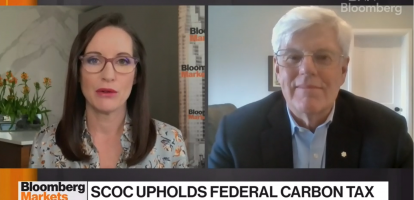
John Manley, Senior Fellow at the C.D. Howe Institute, and former deputy PM and finance minister, talks about the Supreme Court’s ruling that a federal carbon price is entirely constitutional, and the friction between bulding an investment-driven recovery and enacting a tax that is paid by businesses, but only rebated to households.
Don Drummond on BNN – Ontario’s Budget
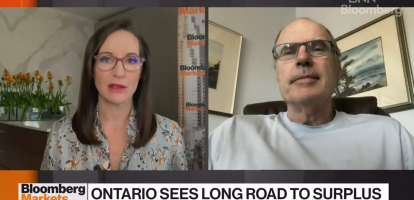
Don Drummond, senior fellow at C.D. Howe Institute and former assistant deputy finance minister, joins BNN Bloomberg to discuss the Ontario budget and what he believes lies ahead for the province’s recovery.
S3 E6: Paying for the Pandemic While Helping Small Business with Jagmeet Singh
 March 25 – Federal NDP leader Jagmeet Singh’s plan to pay for the pandemic is to tax the companies that benefitted the most from the coronavirus response. It would inject more than $5B into Canada’s coffers. Taxing big business is one thing, but how will the NDP help small businesses weather the third wave of […]
 Robert Asselin – Canada Needs An R&d Powerhouse Modelled On The Successes Of Darpa
 From: Robert Asselin To: Federal Budget Decision-Makers Date: March 22, 2021 Re: Canada Needs an R&D Powerhouse Modelled on the Successes of DARPA When considering Canada’s long-term economic health, it is wishful thinking to assume Canada’s economy can thrive on deficit spending, booming real estate and household consumption. To be sure, post-pandemic we will experience short-term growth through pent-up demand. But soon enough […]
 Le Bonhomme Sept Heures Effraie Les Marchés – La Presse Opinion
On le croyait mort, mais certains l’ont vu rôder. Plusieurs prédisent son retour prochain. D’autres en font plutôt des gorges chaudes. L’inflation est redevenue le bonhomme Sept Heures des marchés financiers.
Ce n’est pas tant l’augmentation du coût de la vie qui préoccupe les financiers, par ailleurs bien payés, mais l’effet négatif qu’elle pourrait avoir sur les taux d’intérêt et par-delà, sur leurs investissements. L’inflation soulève aussi un questionnement sur le financement de la dette publique.
Ces derniers temps, l’afflux des bonnes nouvelles énerve les marchés. Aux États-Unis, ils notent l’accélération de la vaccination, le gigantesque stimulus budgétaire et un taux d’épargne très élevé. Cet été, les…
John Lester on BNN – Not fair for the next generation to pay our lockdown-induced debt
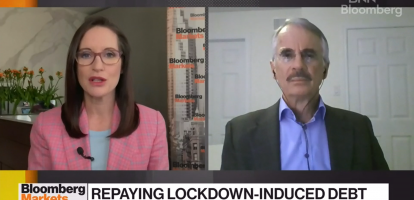
John Lester, executive fellow at the School of Public Policy at the University of Calgary, speaks about his latest report for the C.D. Howe Institute, “Who will pay for the economic lockdown?” Lester says that in terms of fairness to the next generation, we should be thinking about paying the lockdown debt before they start working and paying taxes. He said they shouldn’t have to pay for what they have not benefited from.