



Grant Bishop – We need repeal, or a provincial challenge, to hasty and overbroad new Competition Act greenwashing rule
 From: Grant BishopTo: François-Philippe Champagne, Minister of Innovation, Science and Industry of Canada, cc: Matthew Boswell, Commissioner of Competition; Arif Virani, Minister of Justice and Attorney General of Canada; provincial attorneys generalDate: September 20, 2024Re: We need repeal, or a provincial challenge, to hasty and overbroad new Competition Act greenwashing rule Since the blowback to […]
 Don Drummond – Let’s Hope for Solid Hit from the PBO’s Third Swing at Carbon Tax Analysis
 From: Don DrummondTo: Carbon tax watchersDate: September 18, 2024Re: Let’s Hope for Solid Hit from the PBO’s Third Swing at Carbon Tax Analysis The “corrected” analysis by the Parliamentary Budget Office of the carbon tax and rebates is due soon. One hopes it will get more things right in this third crack at evaluating the […]
 Jon Johnson – TC Energy Loses its Keystone XL Claim Against US
 From: Jon Johnson To: Keystone Saga Watchers Date: September 12, 2024 Re: TC Energy Loses its Keystone XL Claim Against US The Keystone pipeline saga ended for TC Energy over the summer, when a World Bank tribunal issued its award finding for the US. The US had initiated a jurisdictional challenge in this proceeding based […]
 The Big Squeeze: Lessons from the Trans Mountain Pipeline about the Costs of Invisible Bottlenecks
 Over the last decade invisible pipeline bottlenecks cost British Columbians big time – squeezing BC Lower Mainland residents by an estimated $1.5 billion per year prior to the completion of the Trans Mountain Pipeline Expansion.
 Graph of the Week: New Motor Vehicle Registrations in Canada
 Introducing Graph of the Week, a new series from the C.D. Howe Institute’s Graphic Intelligence that presents valuable and easily digestible data. Each Monday we will unveil one new captivating chart or graph with interesting insights, explaining it in two-to-three sentences. Dive into the data with us. The federal government, and some provincial ones, want Canadians to greatly […]
 Glen Hodgson – The Lessons from the Jasper Wildfire
 From: Glen Hodgson To: Canadian wildfire watchers Date: August 9, 2024 Re: The Lessons from the Jasper Wildfire Climate-related disasters including massive wildfires, severe flooding, and other extreme weather are hitting multiple regions of Canada. A few weeks ago, extreme rainfall and severe flooding disrupted life in Toronto and confirmed it isn’t ready for the extreme weather associated with […]
 Charles DeLand – Let Consumers Lead the Way on Green Vehicles and Heat Pumps
 To: Canadians Concerned about Climate Change From: Charles DeLand Date: August 6, 2024 Re: Let Consumers Lead the Way on Green Vehicles and Heat Pumps The federal government and many provinces are working toward reducing greenhouse gas (GHG) emissions with Ottawa committing to achieving a net-zero economy by 2050. However, governments need to proceed more cautiously with two of their […]
 Charles DeLand – Want the best climate policy? Let the market decide
Published in The Globe and Mail.
The federal government and many provinces are working toward reducing greenhouse gas (GHG) emissions with Ottawa committing to achieving a “net-zero” GHG economy by 2050. However, governments need to proceed more cautiously with two of their key policy levers – zero-emission vehicles (ZEVs) and heat pumps – and let consumers lead the way.
Reducing emissions comes at an economic cost. The trick is to ensure Canadians still have the products and services they need while minimizing the cost of each GHG tonne not emitted. This is not an easy task in a complex, energy-intensive economy in which Canadians feel their budgets are stretched. Including upfront and continuing costs, ZEVs and heat…
Ed Waitzer – Market failure has caused fighting climate change to worsen economic inequality
Published in the Globe and Mail.
In evaluating courses of action, corporate decision makers tend to prioritize present and private benefits while discounting long-term costs – especially external ones imposed onto others. Economists term this “market failure,” which are to be publicly regulated by way of taxation, fines, mandates, subsidies or other “nudges.”
Such myopia is not unique to private actors, though. Politicians and public bureaucrats are typically more short-sighted, focusing on maintaining and expanding their power.
Regulatory agencies in the United States, for example, are increasingly subject to political interference and, because they are specialized, are often incapable of addressing the cascading…
DeLand, Gilmour – Federal government ‘fixes’ to overreach come up short
Published in the Financial Post
One reason Canada’s per capita GDP has stalled and may continue to stagnate, putting Canadians’ living standards at risk, is that we struggle to build large projects cheaply and quickly.
The federal government has finally acknowledged there is too much uncertainty in getting major projects approved and has promised certain “fixes,” including recently enacted amendments to its controversial Impact Assessment Act (IAA), which its opponents tagged the “No more pipelines act.” Are those amendments on the right track and will they help get projects built? In our view, no. Instead, we need serious fixes to avoid further litigation and investment uncertainty.
The IAA amendments are a…
Exner-Pirot, DeLand – Seeing energy policy only through the lens of climate change? That time is over
Published in the Globe and Mail
This country needs to have a serious conversation. One that recognizes the challenges posed by a warming world – not least an increase in wildfires, drought and heat waves that have affected almost every Canadian – and grapples with the challenge inherent in matching our climate policy ambitions with taxpayers’ appetite to pay for them, government capacity to implement them, and society’s ability to transform its energy use.
Other countries can only dream of Canada’s enormous reserves of natural resources, and our standard of living depends greatly on exports of minerals, coal, hydroelectricity and especially, oil and gas. As with most human actions, extracting and using these resources…
Smoothing the Path: How Canada Can Make Faster Major-Project Decisions
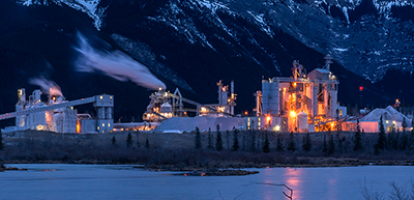 Canadians have been debating whether Canada’s regulatory and permitting processes strike the right balance between attracting investments in major resource projects and mitigating potential harm from those investments. These regulatory processes typically apply to complex and expensive projects, such as mines, large hydrocarbon production projects (oil sands, liquefied natural gas [LNG], offshore oil), electricity […]