October 8, 2026 – With Budget 2026 fast approaching and major new spending pressures on the horizon, Canadian governments face a basic fiscal question: how will they pay for what the country needs when they already have less fiscal room than before past crises? In Keeping Our Fiscal Powder Dry: Why Rising Public Debt Leaves […]
by Christopher Ragan Federal and provincial governments need the fiscal capacity to borrow heavily when major crises occur. Drawing on five premises about public debt, fiscal policy, and public behaviour, this Commentary argues that preserving the necessary fiscal capacity requires reducing debt-to-GDP ratios after crises; otherwise, repeated borrowing from progressively higher debt levels risks undermining […]
8 octobre 2026 – À l’approche du budget de 2026 et alors que d’importantes nouvelles pressions en matière de dépenses se profilent, les gouvernements canadiens sont confrontés à une question budgétaire fondamentale : comment financer les besoins du pays alors qu’ils disposent déjà de moins de marge de manœuvre budgétaire qu’avant les crises passées? Dans […]
From: Marc Desormeaux To: Ontario budget watchers Date: October 5, 2026 Re: Five Takeaways from the 2025/26 Public Accounts Last month’s annual public accounts release provides much insight into the future, as it officially closed Ontario’s books for 2025/26. A close look at the numbers reveals a mixed picture about the state of provincial finances. […]
Countries’ ability to credibly meet their NATO defence spending targets depends on their fiscal position. In 2024, Canada and many other NATO members remained below the 2 percent target. By 2025, as shown by the graph, Canada and most members had reached the 2 percent target. In terms of government debt, Canada sits […]
To: Foreign direct investment watchers From: William B.P. Robson and Mawakina Bafale Date: September 25, 2026 Re: Big Capital Deduction a Good Step, but Ottawa Needs to do More A big question going into the first-ever Canada Investment Summit held in Toronto last week was: can Prime Minister Mark Carney bolster his pitch for fund managers to […]
What does Canada’s rising debt mean for the next federal budget? Don Drummond joins Michael Hainsworth to discuss Canada’s fiscal outlook, government spending, deficits and debt, and whether the country is prepared for another major economic shock.
What does Canada’s rising debt mean for the next federal budget? Don Drummond joins Michael Hainsworth to discuss Canada’s fiscal outlook, government spending, deficits and debt, and whether the country is prepared for another major economic shock.
September 24, 2026 – A new international tax compromise that could give US multinationals an advantage over their Canadian competitors adds urgency to improving Canada’s tax competitiveness. Canada can respond by simplifying the tax rules facing Canadian companies competing globally and eliminating unnecessary compliance burdens, according to a new C.D. Howe Institute report. In Uneven […]
Read the Media Release [EN] 24 septembre 2026 – Un nouveau compromis fiscal international qui pourrait avantager les multinationales américaines par rapport à leurs concurrentes canadiennes accentue l’urgence d’améliorer la compétitivité fiscale du Canada. Le Canada peut réagir en simplifiant les règles fiscales auxquelles sont assujetties les entreprises multinationales canadiennes et en éliminant les obligations […]
Read the Media Release By Geoffrey S. Turner The new side-by-side arrangement for Pillar Two – a global minimum tax regime for large multinationals – leaves Canadian multinationals at a potential competitive disadvantage relative to their US counterparts. US multinationals are largely exempt from key elements of Pillar Two and remain subject to US international […]
Published by The Hill Times. The Canadian economy continues to fail to address the challenge of its weak productivity. Now added is the fissure in the once solid Canada-United States trading relationship. These twin challenges interact. Worsened access to the U.S. market limits Canadian firms’ ability to scale up and strengthen productivity, making it more […]
Membership Application
Interested in becoming a Member of the C.D. Howe Institute? Please fill out the application form below and our team will be in touch with next steps. Note that Membership is subject to approval.
"*" indicates required fields
Member Login
Not a Member yet? Visit our Membership page to learn more and apply.




 October 8, 2026 – With Budget 2026 fast approaching and major new spending pressures on the horizon, Canadian governments face a basic fiscal question: how will they pay for what the country needs when they already have less fiscal room than before past crises? In Keeping Our Fiscal Powder Dry: Why Rising Public Debt Leaves […]
  From: Marc Desormeaux To: Ontario budget watchers Date: October 5, 2026 Re: Five Takeaways from the 2025/26 Public Accounts Last month’s annual public accounts release provides much insight into the future, as it officially closed Ontario’s books for 2025/26. A close look at the numbers reveals a mixed picture about the state of provincial finances. […]
 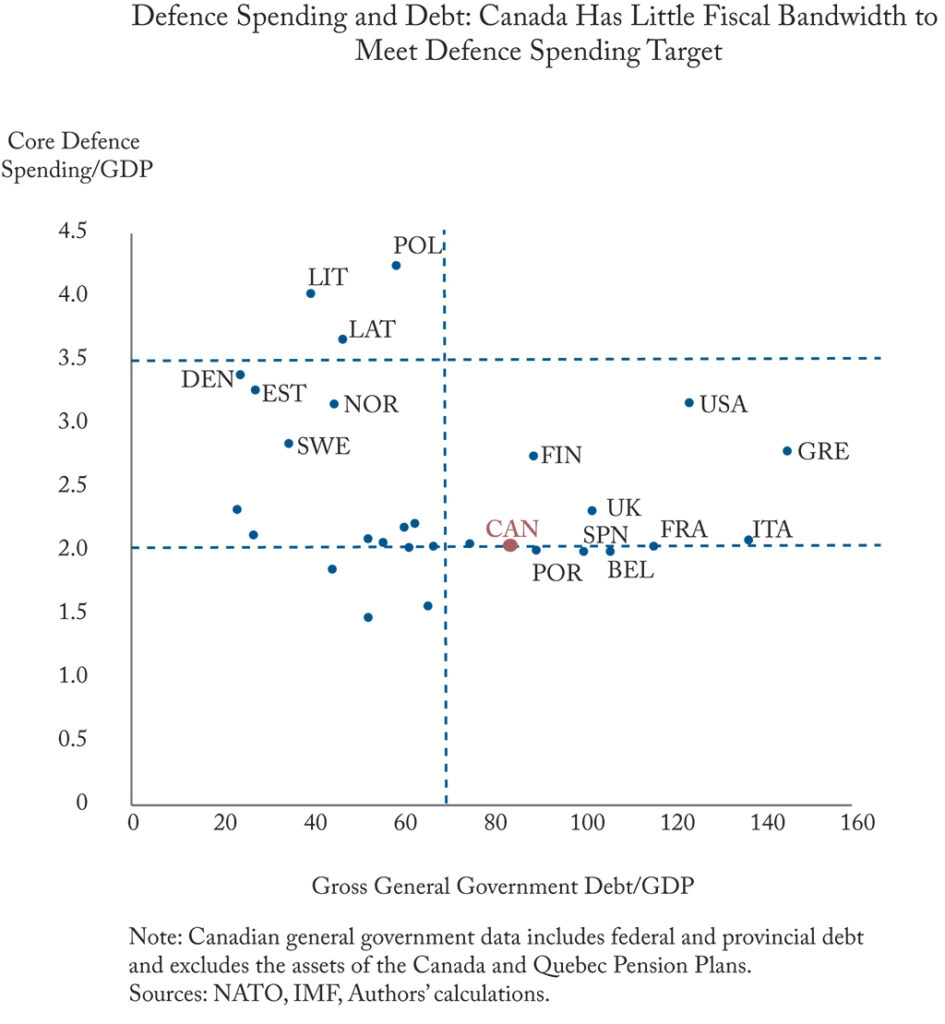 Countries’ ability to credibly meet their NATO defence spending targets depends on their fiscal position. In 2024, Canada and many other NATO members remained below the 2 percent target. By 2025, as shown by the graph, Canada and most members had reached the 2 percent target. In terms of government debt, Canada sits […]
  To: Foreign direct investment watchers From: William B.P. Robson and Mawakina Bafale Date: September 25, 2026 Re: Big Capital Deduction a Good Step, but Ottawa Needs to do More A big question going into the first-ever Canada Investment Summit held in Toronto last week was: can Prime Minister Mark Carney bolster his pitch for fund managers to […]
 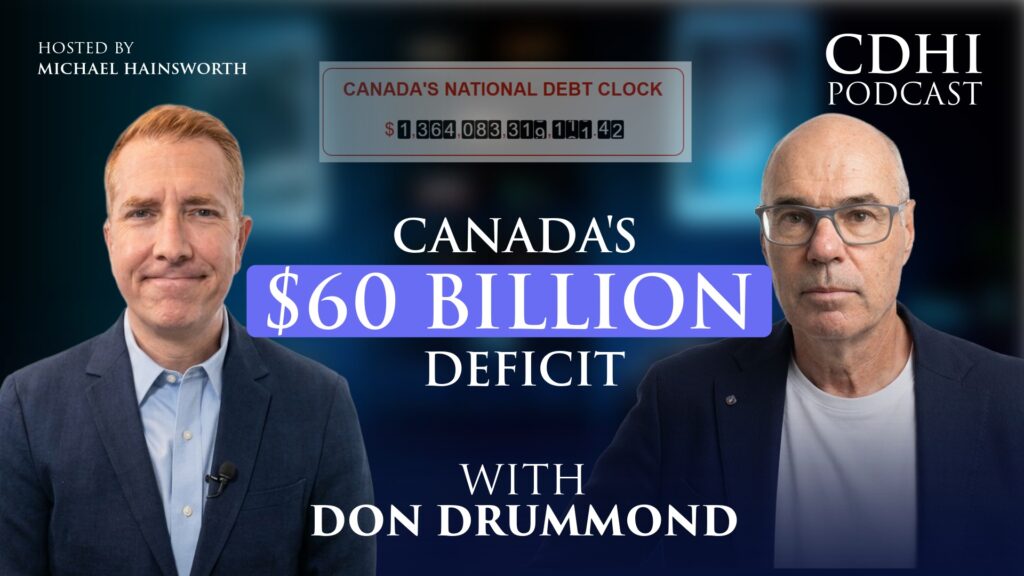 What does Canada’s rising debt mean for the next federal budget? Don Drummond joins Michael Hainsworth to discuss Canada’s fiscal outlook, government spending, deficits and debt, and whether the country is prepared for another major economic shock.
  September 24, 2026 – A new international tax compromise that could give US multinationals an advantage over their Canadian competitors adds urgency to improving Canada’s tax competitiveness. Canada can respond by simplifying the tax rules facing Canadian companies competing globally and eliminating unnecessary compliance burdens, according to a new C.D. Howe Institute report. In Uneven […]
  Published by The Hill Times. The Canadian economy continues to fail to address the challenge of its weak productivity. Now added is the fissure in the once solid Canada-United States trading relationship. These twin challenges interact. Worsened access to the U.S. market limits Canadian firms’ ability to scale up and strengthen productivity, making it more […]