In this episode, host Michael Hainsworth speaks with Kate Koplovich, Senior Policy Analyst at the C.D. Howe Institute, about Ottawa’s proposed Canada Strong Fund and what a new $25 billion sovereign wealth fund could mean for Canadians. They break down how sovereign wealth funds work, why Canada’s model differs from successful funds in places like […]
Published in Financial Post. It’s tax time. With returns due Thursday, millions of Canadians will once again file at the last minute, late or not at all. Those who don’t file potentially miss out on various valuable tax credits, including for children, to help workers or to supplement spending on groceries and other essentials. Ottawa’s answer […]
by Alexandre Laurin Canada increasingly uses the tax system to deliver income-tested benefits, making filing essential for access. Budget 2025’s “automatic federal benefits” initiative aims to expand participation but largely targets individuals already known to the Canada Revenue Agency and participating in the tax system. This limits its reach when it comes to truly hard-to-engage […]
30 avril 2026 – Environ 1,2 million de Canadiens ne produisent pas de déclaration de revenus chaque année, ce qui expose plusieurs d’entre eux au risque de passer à côté de prestations fondées sur le revenu. Alors qu’Ottawa s’emploie à élargir la production automatique des déclarations, un nouveau rapport de l’Institut C.D. Howe suggère que […]
April 30, 2026 – Roughly 1.2 million Canadians fail to file tax returns, placing many at risk of missing out on income-tested benefits. While Ottawa is moving to expand automatic tax filing, a new C.D. Howe Institute report suggests this approach may have limited impact on hard-to-reach non-filers. In “Simple on Paper, Complex in Practice: […]
Published in Financial Post. Ottawa is pitching Canada’s “first” national sovereign wealth fund as a way to give every Canadian “a stake and the opportunity to benefit” from nation-building projects. The plan? Borrow $25 billion to capitalize the fund, which aims to invest in major infrastructure projects, such as clean and conventional energy, critical minerals, agriculture and […]
To: Fiscal Policy Watchers From: Colin Busby, Nicholas Dahir and Kate Koplovich Date: April 29, 2026 Re: Not Enough Deficit Discipline in the Update, the Fall Budget Must Get Serious Yesterday’s spring economic update should leave Canadians with mixed feelings. There is reason for both optimism and alarm. Most importantly, with a majority in hand, the federal government now has the runway to go big […]
Published in The Globe and Mail. Many Canadians may still have an image of Canada as a country aware that governments cannot spend and borrow without limit. They should not. With the economy operating near capacity and growth in productive capacity weak, governments continue to run deficits and project rising debt ratios, undermining growth and […]
23 avril 2026 – Sans mesures audacieuses, la dette nette combinée des gouvernements fédéral et provinciaux devrait avoisiner 82 % du PIB d’ici 2028-2029 – bien au-dessus des niveaux d’avant la pandémie. Le Canada se dirige vers une crise budgétaire. Pourtant, les décideurs politiques, enclins à recourir à des artifices budgétaires comme la récente suspension […]
April 23, 2026 – Without bold action, combined federal and provincial net debt is projected to approach 82 percent of GDP by 2028/29 – far above pre-pandemic levels. Canada is drifting toward a fiscal crisis. Yet policymakers, prone to fiscal gimmicks like the recent debt-financed fuel tax suspension, appear unwilling to act, according to a […]
by Don Drummond, William B.P. Robson and Alexandre Laurin Canada can no longer pride itself on its fiscal discipline. With the economy operating near capacity and growth in productive capacity weak, governments continue to run deficits and project rising debt ratios, undermining growth and living standards rather than supporting them. Government projections understate the risks. […]
From: Harvey NaglieTo: Ontario productivity observersDate: April 17, 2026 Re: Ontario Budget 2026: A Capability Assessment Ontario’s 2026 budget projects a $13.8-billion deficit under the rubric A Plan to Protect Ontario – a response to real external pressure: Tariffs contributed to the loss of nearly 40,000 jobs in the auto, steel and aluminum sectors in 2025. The budget lists specific strategic sectors – nuclear energy, critical minerals, life sciences, defence manufacturing and […]
Membership Application
Interested in becoming a Member of the C.D. Howe Institute? Please fill out the application form below and our team will be in touch with next steps. Note that Membership is subject to approval.
"*" indicates required fields
Member Login
Not a Member yet? Visit our Membership page to learn more and apply.




 In this episode, host Michael Hainsworth speaks with Kate Koplovich, Senior Policy Analyst at the C.D. Howe Institute, about Ottawa’s proposed Canada Strong Fund and what a new $25 billion sovereign wealth fund could mean for Canadians. They break down how sovereign wealth funds work, why Canada’s model differs from successful funds in places like […]
  Published in Financial Post. It’s tax time. With returns due Thursday, millions of Canadians will once again file at the last minute, late or not at all. Those who don’t file potentially miss out on various valuable tax credits, including for children, to help workers or to supplement spending on groceries and other essentials. Ottawa’s answer […]
 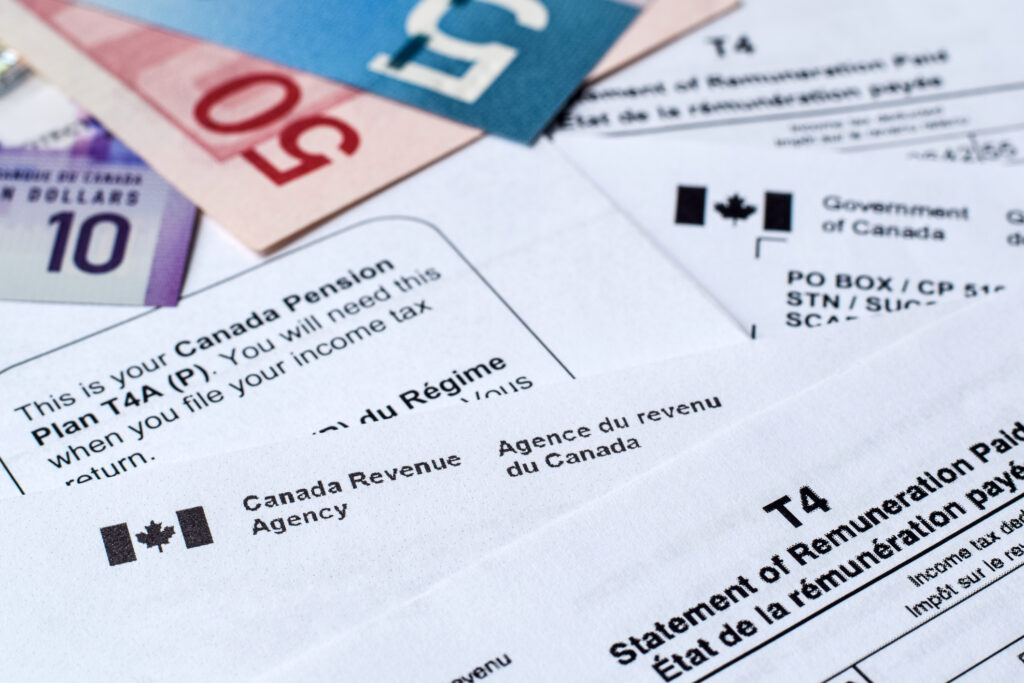 by Alexandre Laurin Canada increasingly uses the tax system to deliver income-tested benefits, making filing essential for access. Budget 2025’s “automatic federal benefits” initiative aims to expand participation but largely targets individuals already known to the Canada Revenue Agency and participating in the tax system. This limits its reach when it comes to truly hard-to-engage […]
  Published in Financial Post. Ottawa is pitching Canada’s “first” national sovereign wealth fund as a way to give every Canadian “a stake and the opportunity to benefit” from nation-building projects. The plan? Borrow $25 billion to capitalize the fund, which aims to invest in major infrastructure projects, such as clean and conventional energy, critical minerals, agriculture and […]
  To: Fiscal Policy Watchers From: Colin Busby, Nicholas Dahir and Kate Koplovich Date: April 29, 2026 Re: Not Enough Deficit Discipline in the Update, the Fall Budget Must Get Serious Yesterday’s spring economic update should leave Canadians with mixed feelings. There is reason for both optimism and alarm. Most importantly, with a majority in hand, the federal government now has the runway to go big […]
  23 avril 2026 – Sans mesures audacieuses, la dette nette combinée des gouvernements fédéral et provinciaux devrait avoisiner 82 % du PIB d’ici 2028-2029 – bien au-dessus des niveaux d’avant la pandémie. Le Canada se dirige vers une crise budgétaire. Pourtant, les décideurs politiques, enclins à recourir à des artifices budgétaires comme la récente suspension […]
  April 23, 2026 – Without bold action, combined federal and provincial net debt is projected to approach 82 percent of GDP by 2028/29 – far above pre-pandemic levels. Canada is drifting toward a fiscal crisis. Yet policymakers, prone to fiscal gimmicks like the recent debt-financed fuel tax suspension, appear unwilling to act, according to a […]
  From: Harvey NaglieTo: Ontario productivity observersDate: April 17, 2026 Re: Ontario Budget 2026: A Capability Assessment Ontario’s 2026 budget projects a $13.8-billion deficit under the rubric A Plan to Protect Ontario – a response to real external pressure: Tariffs contributed to the loss of nearly 40,000 jobs in the auto, steel and aluminum sectors in 2025. The budget lists specific strategic sectors – nuclear energy, critical minerals, life sciences, defence manufacturing and […]