



The Bank of Canada and Financial Stability: A New Mandate?
 The Bank of Canada’s current mandate should not be expanded to include financial stability, says a new report from the C.D. Howe Institute. In “The Bank of Canada and Financial Stability: A New Mandate?,” authors Michael D. Bordo and Pierre L. Siklos marshal historical and empirical evidence to make the case that the Bank of […]
 Bank of Canada Should Hold Overnight Rate at 1.75 Percent Next Week, Cut to 1.50 Percent in Six Months: C.D. Howe Institute Monetary Policy Council
October 24, 2019 – The C.D. Howe Institute’s Monetary Policy Council (MPC) has recommended that the Bank of Canada keep its target for the overnight rate, its benchmark policy interest rate, at 1.75 percent at its next announcement on October 30, 2019, before lowering it to 1.50 percent by April 2020.
The MPC provides an independent assessment of the monetary stance consistent with the Bank of Canada’s 2 percent inflation target. William Robson, the Institute’s President and CEO, chairs the Council. Council members make recommendations for the Bank of Canada’s upcoming interest-rate announcement, the subsequent announcement, and the announcements six months and one year ahead. The Council’s formal recommendation…
Ambler, Kronick – Lessons for Canada in the US Repo Rate Spike
 To: Canadians Concerned about Monetary Policy From: Jeremy Kronick and Steve Ambler Date: October 11, 2019 Re: Lessons for Canada in the US Repo Rate Spike Last month, overnight borrowing rates in the US skyrocketed as high as 9 percent as the overnight lending market froze and financial institutions with excess cash on deposit at […]
 S1 E13 – Pre-Election, Pre-Recession
 With Canada’s 2019 federal election around the corner, and the possibility of a recession, why aren’t the major party leaders talking about what they would do in the event of a downturn? Bill Robson, President and CEO of the C.D. Howe Institute talks with Michael Hainsworth on what spending versus tax cuts means for Canada’s […]
 Laurent Desbois – Going To Print: One Recession Away From The Inevitable
 From: Laurent Desbois To: Canadians concerned about the next recession Date: October 2, 2019 Subject: Going to Print: One Recession Away from the Inevitable Eleven years after the 2008 financial crisis, interest rates remain historically low –we even have negative interest rates in Europe and Japan. Despite this huge monetary stimulus, advanced economies are struggling to reach the 2 […]
 Laurent Desbois – Comment La Planche à Billet Est Devenue Inévitable
 De la part de: Laurent Desbois A l’attention de: Les Canadiens préoccupés par la prochaine récession Date: 2 Octobre, 2019 Objet: Comment la planche à billet est devenue inévitable 11 ans après la crise de 2008, les taux d’intérêt demeurent historiquement bas – nous avons même des taux d’intérêt négatifs en Europe et au Japon. Malgré cet immense stimulus […]
 Glen Hodgson – Why Are Recessions So Hard To Forecast?
 From: Glen Hodgson To: Canadians concerned about a recession Date: October 1, 2019 Re: Why Are Recessions So Hard to Forecast? In a recent Intelligence Memo, I discussed the factors that could create the next recession in Canada. A Canadian recession is likely to be imported, not made at home, with the China-US trade dispute and other international […]
 Ambler, Kronick – Bank of Canada Holding out Against Global Rate Cuts Trend
From: Steve Ambler and Jeremy Kronick To: Canadian Interest Rate Watchers Date: September 11, 2019 Re: Bank of Canada Holding Out Against Global Rate Cuts Trend The Bank of Canada last week held its overnight rate constant at 1.75 percent. This was expected by markets, but flies in the face of the general trend towards rate cuts by […]William White on BNN – Three central banks will set the world’s economic conditions
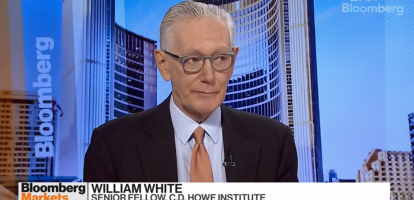
William White, senior fellow at C.D. Howe Institute, joins BNN Bloomberg to discuss his current macro economic outlook and what challenges he thinks lie ahead for monetary policy.
Bank of Canada bucks the trend, but for how much longer? – Globe and Mail Op-Ed
The Bank of Canada announced on Wednesday that it was holding its overnight rate constant at 1.75 per cent. Although this was what the markets expected, it flies in the face of the general trend toward rate cuts by central banks around the world. It seems unlikely that the Bank of Canada can resist conforming to this trend for much longer, despite the overall strength of the Canadian economy.
Current conditions certainly seem to justify holding the line. Second-quarter economic growth was particularly strong, making up for weakness in the first quarter. It exceeded market expectations and the estimate of the Bank of Canada in its July Monetary Policy Report. Headline inflation in July was steady at 2 per cent. This was also…
Hugh O’Reilly on BNN – Trade war threatening spikes in bonds values
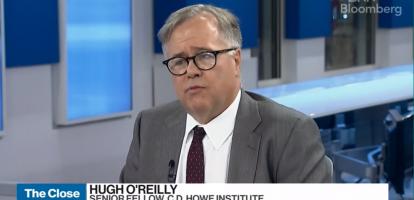
Hugh O’Reilly, senior fellow at C.D. Howe, executive in residence at the GRI and former CEO of OPTrust, joins BNN Bloomberg to discuss global risk and the geopolitical events he is worried about impacting investors’ portfolios.
Bank of Canada Should Hold the Overnight Rate at 1.75 Percent Next Week, Cut to 1.25 Percent in Six Months: C.D. Howe Institute Monetary Policy Council
August 29, 2019 – The C.D. Howe Institute’s Monetary Policy Council (MPC) has recommended that the Bank of Canada keep its target for the overnight rate, its benchmark policy interest rate, at 1.75 percent at its next announcement on September 4, 2019, before lowering it to 1.25 percent by March 2020.
The MPC provides an independent assessment of the monetary stance consistent with the Bank of Canada’s 2 percent inflation target. William Robson, the Institute’s President and CEO, chairs the Council. Council members make recommendations for the Bank of Canada’s upcoming interest-rate announcement, the subsequent announcement, and the announcements six months and one year ahead. The Council’s formal recommendation…