



Why A Capital Gains Tax On Principal Residences Won’t Help To Cool The Housing Market – Globe And Mail Op-ed
The housing market is hot, and has been for several years, especially in Canada’s largest cities. Many policy attempts and proposals have been made to slow it down, with the focus almost always on trying to reduce demand. The most recent proposal along these lines is a capital gains tax on principal residences.
The argument for taxing capital gains on the sale of owner-occupied principal residences is twofold. First, the argument goes, the tax will decrease demand for houses and condos, putting a stopper on illogical price appreciations. Second, governments are starved for tax revenues, and taxing these gains would help fill that gap.
In practice, however, neither of these is likely to play out as expected.
In some…
Don Drummond – Ontario Budget: Much Heavy Lifting Required To Achieve Fiscal Stability
 From: Don Drummond To: Ontario Budget Watchers Date: March 29, 2021 Re: Ontario Budget: Much Heavy Lifting Required to Achieve Fiscal Stability Ontario’s 2021 budget last week added a longer-term perspective to the usual short- or medium-term perspective of budgets, and it does not make for pleasant viewing. Its three scenarios for GDP growth – 1.8, 2.0 and […]
 Who should pay for the lockdown debt? – Financial Post Op-Ed
The global economic lockdown implemented to contain the COVID-19 virus has caused the most severe economic downturn in Canada since the Great Depression of the 1930s. But while production plummeted, the overall income of Canadians hardly budged because of the federal government’s aggressive debt-financed policy response. Including both planned stimulus spending and the effects of the recession on revenues and expenditures, the lockdown-related increase in government debt amounts to about $550 billion.
As I point out in a recent C.D. Howe Institute paper, most of the current discussion around the additional debt focuses on its sustainability — whether it can be rolled over indefinitely without requiring tax…
Who Will Pay for the Economic Lockdown?
 Someone has to pick up the tab for lockdown-induced debt Federal debt is likely to be about $550 billion higher because of pandemic-related lockdowns, and fairness requires this increase in debt be retired before the next generation starts working and paying taxes, which will occur 18 to 25 years from now. The analysis in this […]
 Don Drummond on BNN – Ontario’s Budget
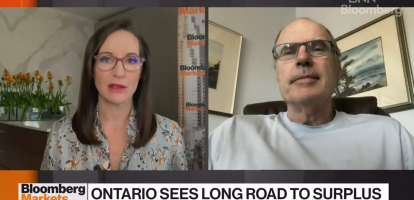
Don Drummond, senior fellow at C.D. Howe Institute and former assistant deputy finance minister, joins BNN Bloomberg to discuss the Ontario budget and what he believes lies ahead for the province’s recovery.
S3 E6: Paying for the Pandemic While Helping Small Business with Jagmeet Singh
 March 25 – Federal NDP leader Jagmeet Singh’s plan to pay for the pandemic is to tax the companies that benefitted the most from the coronavirus response. It would inject more than $5B into Canada’s coffers. Taxing big business is one thing, but how will the NDP help small businesses weather the third wave of […]
 John Lester on BNN – Not fair for the next generation to pay our lockdown-induced debt
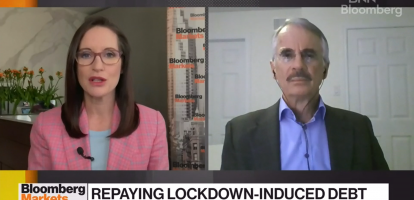
John Lester, executive fellow at the School of Public Policy at the University of Calgary, speaks about his latest report for the C.D. Howe Institute, “Who will pay for the economic lockdown?” Lester says that in terms of fairness to the next generation, we should be thinking about paying the lockdown debt before they start working and paying taxes. He said they shouldn’t have to pay for what they have not benefited from.
William B.P. Robson – Borrowing Is No Foundation For Durable Federal Programs
 From: William B.P. Robson To: The House of Commons Standing Committee on Finance Date: March 19, 2021 Re: Borrowing is No Foundation for Durable Federal Programs The federal government’s current reliance on borrowing rather than taxation to fund its programs is unprecedented. That means that the apparent cost of federal programs to taxpayers is unprecedentedly […]
 Is Inflation Back? It’s Not An Economic Question, It’s Political – Globe And Mail Op-ed
Suddenly, inflation is in the news. In Canada and abroad, spending is surging and COVID-impaired production is struggling to keep up. Key commodities – oil, lumber and metals – are expensive.
It is front-of-mind in financial markets as well. The yield on the federal government’s 30-year bonds, which was below 0.9 per cent last August, topped 2.0 per cent last week – well above its pre-pandemic level.
Do these headlines and fears represent overreactions to rogue statistics and possible minor tactical shifts by central banks? Or is something more fundamental happening? Will politicians who won’t stop spending more than they tax end up forcing central banks to print money to cover the difference?
Current indicators and…
Don Drummond – For A Canadian Equitable Growth Institute
 From: Don Drummond To: Finance Minister Chrystia Freeland Date: February 26, 2021 Re: For a Canadian Equitable Growth Institute Canada’s weak economic growth prospects threaten the well-being of Canadians and preclude the introduction of the Liberal government’s spending initiatives without undue fiscal risk or much higher tax rates. The fall fiscal statement estimated Canada’s potential growth rate to […]
 William B.P. Robson – Provincial Debts And Federal Bailouts: It’s Complicated
 From: William B.P. Robson To: Canadian Debt Watchers Date: February 25, 2021 Re: Provincial Debts and Federal Bailouts – It’s Complicated When COVID-19 crashed the economy last spring, Canadian governments ramped up borrowing so much that concern spiked about fiscally weaker provinces finding buyers for their debt. The Bank of Canada saw off that crisis by including provincial […]
 Targeted lockdowns could cut the pandemic’s economic losses by billions – Financial Post Op-Ed
Vaccines are giving everyone hope that the COVID-19 global pandemic may soon allow us to return to our normal lives. That hope has been tempered by frustrations about vaccine rollout and fear of mutating variants and so almost all parts of the country remain in some kind of lockdown. But what strategy should we follow on lockdowns to get us through to what we hope is full inoculation? What we need is a tool that considers both health and the economy, not the false dichotomy that we must choose one over the other.
Research we have conducted for a C.D. Howe Institute paper using an epidemiological-economic model provides important insights to help guide us until a vaccine is widely available. The results we…